Does SSD Make Laptop Faster – Understanding the Performance Difference
Disclosure: This post contains affiliate links. LaptopVoyager.com participates in the Amazon Associates Program and may earn commissions on qualifying purchases, at no extra cost to you.
Last Updated: March 2026
Storage technology plays a major role in how quickly a laptop starts, loads programs, and handles everyday tasks. Many modern laptops use SSDs (solid-state drives) instead of traditional HDDs (hard disk drives) because SSDs are designed for faster data access.
Understanding whether an SSD makes a laptop faster helps explain why upgrading storage is often one of the most noticeable performance improvements for many systems.
👉 If you’re evaluating powerful systems designed for demanding workloads, see our guide to the best high performance laptop.
🔍 What an SSD Does in a Laptop
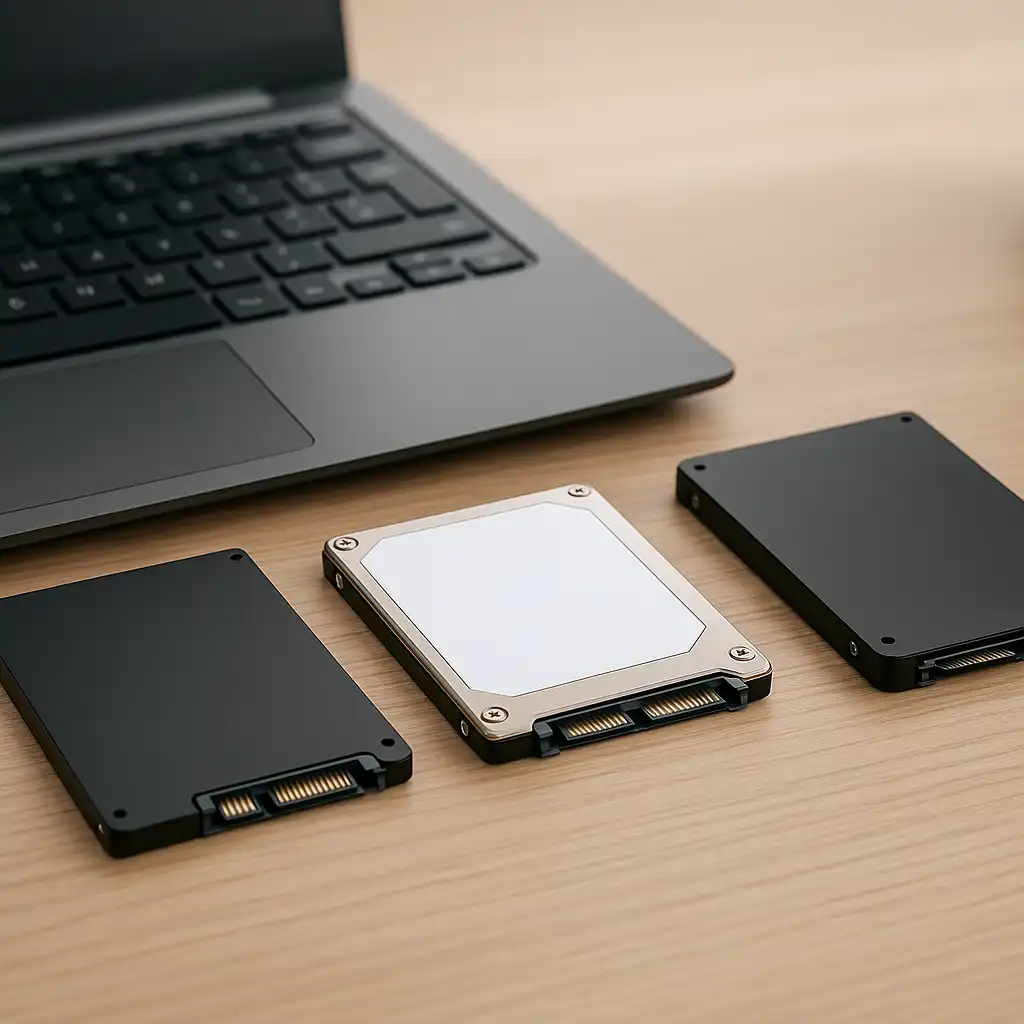
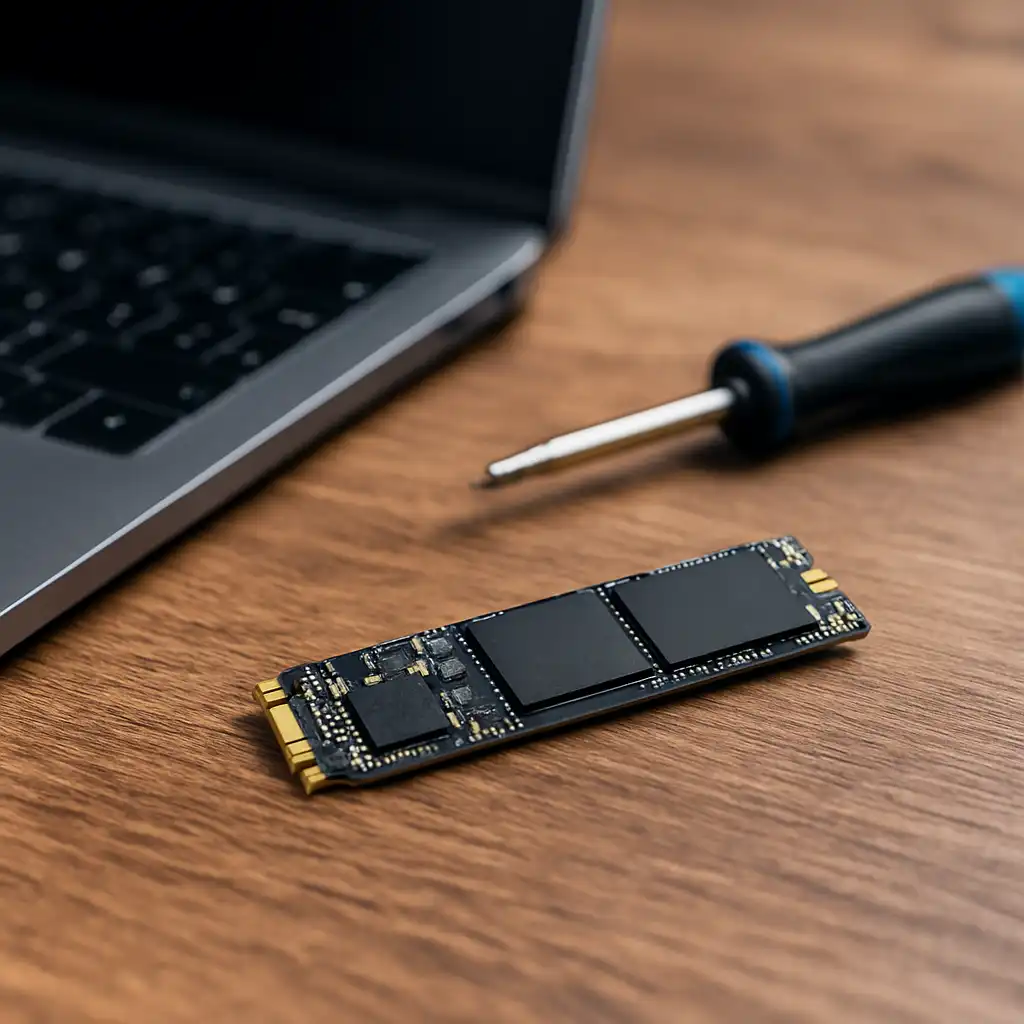
An SSD (solid-state drive) stores data using flash memory instead of spinning disks.
Traditional hard drives rely on mechanical components that physically move to locate and read data. SSDs, by contrast, access files electronically without moving parts.
Because of this design difference, SSDs are capable of retrieving data much faster than mechanical drives. According to manufacturer specifications, modern NVMe SSDs can deliver read speeds several times higher than traditional HDD storage.
Faster data access improves system responsiveness during everyday computing tasks.
🔍 How SSDs Improve Laptop Speed
Installing an SSD can improve several areas of laptop performance.
Faster system boot times
Operating systems stored on SSDs load significantly faster than when installed on mechanical drives.
Quicker application launches
Programs stored on SSD storage open faster because the drive can retrieve application files more quickly.
Improved file transfers
Large files copy and move more quickly due to higher read and write speeds.
Better multitasking responsiveness
When multiple applications access storage simultaneously, SSDs can handle requests more efficiently.
These improvements often make laptops feel more responsive even if the processor and memory remain unchanged.
🔍 SSD vs HDD Performance Differences
The main performance difference between SSDs and HDDs comes from how they store and retrieve data.
Hard drives use spinning magnetic disks and read/write heads to access information. This process requires physical movement, which introduces delays.
SSDs store data on flash memory chips. Because there are no moving parts, the drive can retrieve data almost instantly.
Published benchmarks frequently show SSDs delivering dramatically faster random read speeds than HDDs. Random access performance is particularly important for operating systems and application loading.
🔍 Why SSDs Help Multitasking
Modern operating systems constantly read and write data in the background.
When a laptop runs multiple applications at the same time, the storage device must handle many small data requests simultaneously.
SSDs are designed to process multiple input/output operations efficiently. This allows the system to switch between programs more smoothly.
If you’re optimizing a laptop for multitasking workloads, memory capacity also plays an important role. Our guide on how much ram do i need on a laptop explains how RAM affects system responsiveness.
🔍 Types of SSDs Used in Laptops
Not all SSDs operate at the same speed. Several types are commonly used in modern laptops.
SATA SSDs
These drives connect using the SATA interface and are significantly faster than HDDs but slower than newer SSD technologies.
NVMe SSDs
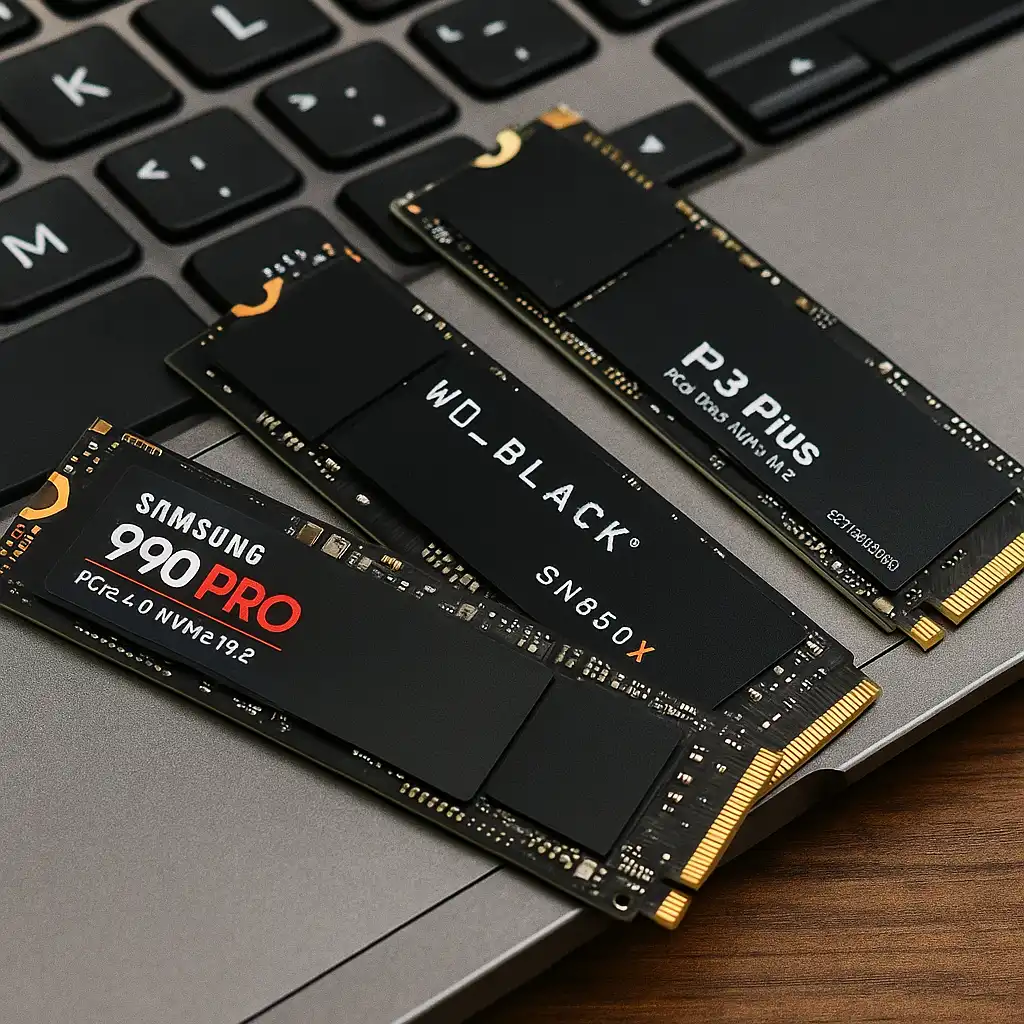
NVMe drives use the PCIe interface, allowing much higher data transfer speeds.
PCIe Gen4 and Gen5 SSDs
Newer SSD generations support extremely high read and write speeds when paired with compatible processors and motherboards.
Laptop manufacturers typically choose SSD types based on performance goals, power efficiency, and system design.
📌 Key Takeaways
- SSDs access data much faster than traditional hard drives
- Faster storage improves boot times, application loading, and file transfers
- NVMe SSDs provide significantly higher speeds than SATA SSDs
- Storage speed plays an important role in overall laptop responsiveness
🟢 FAQs
Q: Will upgrading to an SSD make an old laptop faster?
In many cases, replacing an HDD with an SSD can noticeably improve system responsiveness and loading times.
Q: Is SSD speed more important than CPU speed?
Both components influence performance. CPUs handle processing tasks, while SSDs affect how quickly data can be accessed.
Q: Are NVMe SSDs faster than SATA SSDs?
Yes. NVMe drives typically deliver much higher read and write speeds because they use the PCIe interface.
Q: Does SSD storage improve gaming performance?
SSDs can reduce game loading times and asset streaming delays, though frame rates are primarily influenced by the CPU and GPU.
✅ Conclusion
SSDs can make laptops significantly faster by reducing data access delays. Faster storage improves boot times, application launches, and overall system responsiveness.
When combined with sufficient RAM and a capable processor, SSD storage helps modern laptops handle multitasking and demanding workloads more efficiently.