Is 240Hz Worth It for Laptop Gaming – Performance vs Real-World Benefits
Disclosure: This post contains affiliate links. LaptopVoyager.com participates in the Amazon Associates Program and may earn commissions on qualifying purchases, at no extra cost to you.
Last Updated: March 2026
High refresh rate monitors are often marketed as a major upgrade for gaming, but not every laptop can fully benefit from a 240Hz display. The actual experience depends on your GPU performance, game type, and connection setup.
Modern gaming monitors support 240Hz and beyond, but reaching those frame rates requires compatible hardware. Understanding when 240Hz makes a difference helps you avoid overpaying for features your system may not use.
👉 If you’re comparing display options, see our guide to best gaming monitors
This guide explains when 240Hz is worth it and when a lower refresh rate may be more practical.
📌 Key Takeaways
- 240Hz is designed for smoother motion and lower input latency
- Benefits depend on whether your laptop can reach high frame rates
- Competitive games benefit more from 240Hz than cinematic titles
- Lower refresh rates may offer better balance for mid-range systems
- Matching refresh rate to GPU performance is essential
🔍 What Does 240Hz Mean in Gaming
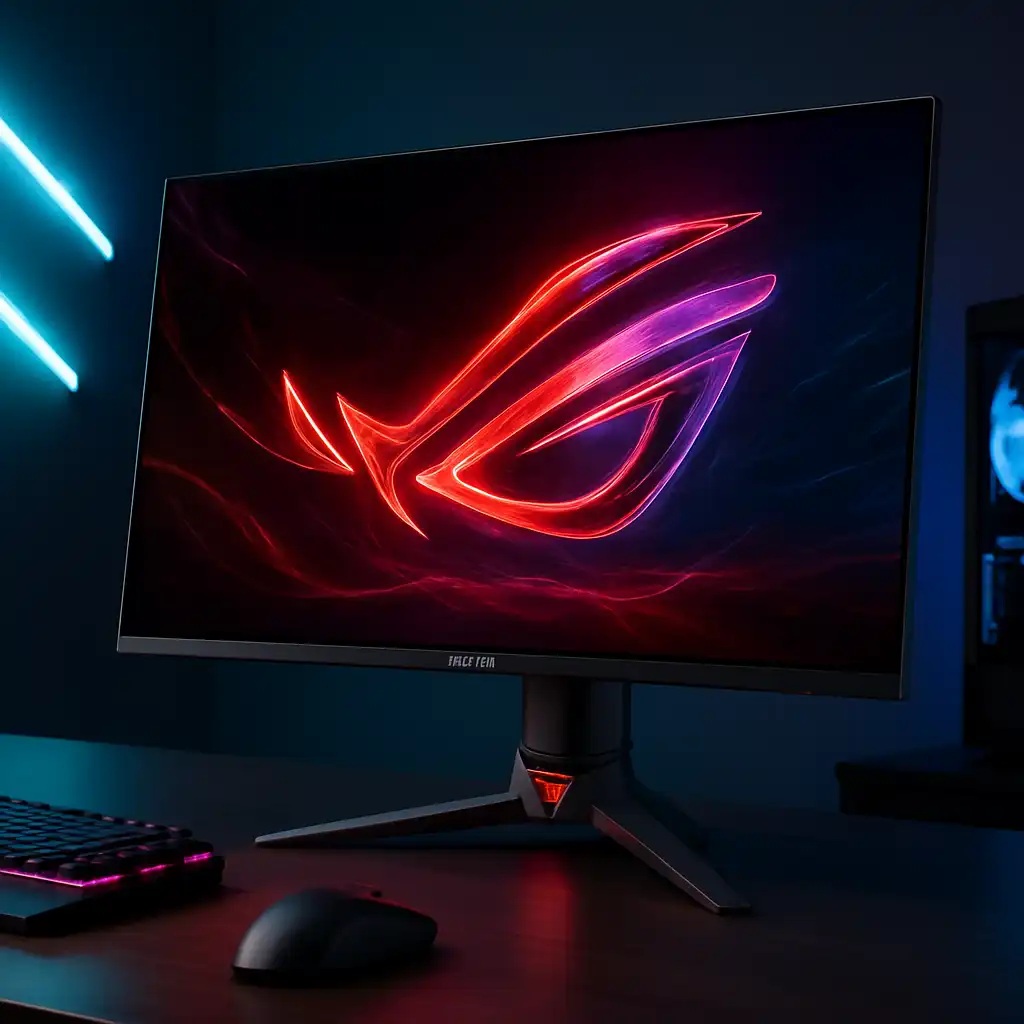
A 240Hz monitor is designed to refresh the screen 240 times per second.
According to manufacturer specifications and published benchmarks, higher refresh rates reduce motion blur and improve responsiveness. This can make fast movements appear smoother, especially in competitive games.
However, your laptop must deliver frame rates close to 240 FPS to fully benefit. If your system cannot reach those levels, the advantage becomes less noticeable.
🔍 When 240Hz Makes a Difference
240Hz is most noticeable in fast-paced, competitive games.
Examples include:
- First-person shooters
- esports titles
- fast reaction-based gameplay
Published benchmarks show that higher refresh rates improve motion clarity and reduce perceived input lag in these scenarios.
For users playing at high frame rates, 240Hz can provide a smoother and more responsive experience compared to 144Hz.
🔍 When 240Hz Is Less Noticeable
In many cases, the difference between 144Hz and 240Hz is less significant.
This is especially true for:
- Story-driven games
- open-world titles
- games with lower frame rates
If your laptop typically runs games below 144 FPS, a 240Hz monitor will not provide its full benefit.
👉 For a broader performance comparison, see best monitor refresh rate for laptop gaming
Matching refresh rate with actual performance is more important than choosing the highest number.
🔍 Hardware Requirements for 240Hz
Running games at 240Hz requires strong hardware.
Based on specifications and benchmark data:
- High-end GPUs are needed for consistent high frame rates
- CPU performance also affects frame rate stability
- Cooling systems influence sustained performance
Many mid-range laptops are designed to perform best between 60Hz and 144Hz, depending on the game.
This makes 240Hz more suitable for high-performance systems.
🔍 Resolution vs Refresh Rate Trade-Off
Higher refresh rates are often paired with lower resolutions.
For example:
- 1080p + 240Hz → easier to achieve high FPS
- 1440p + 240Hz → requires stronger hardware
- 4K + 240Hz → typically needs top-tier systems
According to manufacturer specifications, balancing resolution and refresh rate is essential for maintaining smooth gameplay.
In many setups, choosing 1440p at 144Hz may provide a better overall experience than pushing for 240Hz.
🔍 Is 240Hz Worth It for Laptop Gaming
The value of 240Hz depends on your use case.
240Hz is worth it if:
- You play competitive games
- Your laptop can reach high frame rates
- You prioritize responsiveness over visual detail
240Hz may not be necessary if:
- You play story-driven or slower-paced games
- Your laptop cannot consistently exceed 144 FPS
- You prioritize resolution or visual quality
This makes 240Hz a specialized upgrade rather than a universal requirement.
🟢 FAQs
Q: Is 240Hz better than 144Hz for gaming?
240Hz offers smoother motion, but the difference depends on whether your system can reach high frame rates.
Q: Can a laptop run games at 240Hz?
Some high-performance laptops can, but many systems are designed for lower frame rates depending on specifications.
Q: Is 240Hz noticeable in all games?
No. The benefit is most visible in fast-paced games with high frame rates.
Q: Should I choose higher resolution or higher refresh rate?
This depends on your priorities. Higher refresh rates improve responsiveness, while higher resolutions improve visual detail.
✅ Conclusion
240Hz monitors are designed to deliver smoother motion and faster response times, but their benefits depend heavily on your laptop’s performance. Based on specifications and benchmark data, they are most effective in competitive gaming scenarios with high frame rates.
For many users, a balanced setup with 144Hz may provide a more practical experience. Choosing a refresh rate that matches your system ensures consistent and efficient performance.