Are Gaming Laptops Good for Students – Pros, Cons, and Real Use Cases
Disclosure: This post contains affiliate links. LaptopVoyager.com participates in the Amazon Associates Program and may earn commissions on qualifying purchases, at no extra cost to you.
Last Updated: February 2026
Gaming laptops often attract students because of their high performance and flashy specs. But more power doesn’t always mean a better experience for schoolwork, especially when portability, battery life, and noise come into play.
This guide breaks down when gaming laptops make sense for students and when a more traditional laptop is the smarter choice.
👉 for a full overview by age group and study level, see our main guide to best laptops for students.
🔍 What Defines a Gaming Laptop
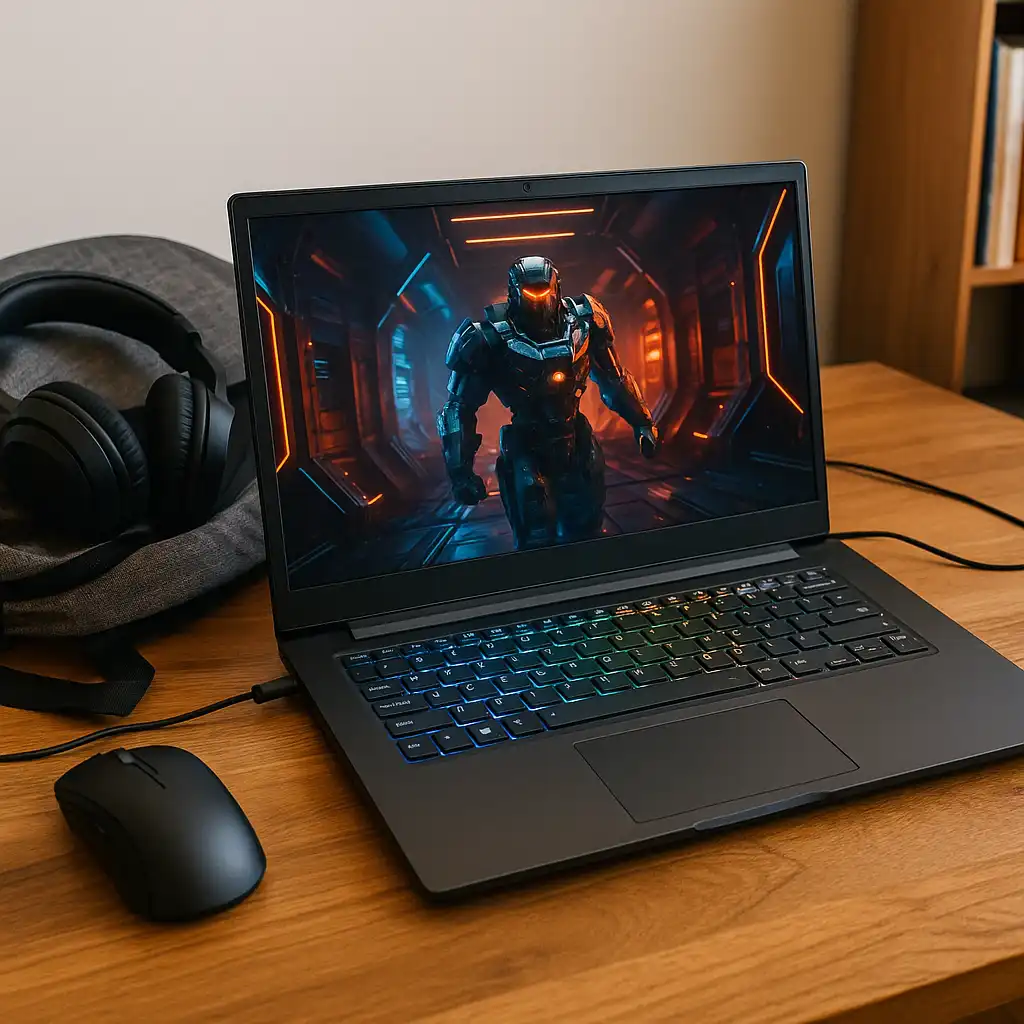
Gaming laptops are typically equipped with high-performance CPUs, dedicated GPUs, advanced cooling systems, and high-refresh-rate displays. These components are designed to handle demanding workloads like 3D gaming and real-time rendering.
Because of this hardware focus, gaming laptops are usually heavier, thicker, and more power-hungry than standard student laptops.
🔍 Where Gaming Laptops Help Students
Gaming laptops can benefit students in majors that use GPU-accelerated software. Fields like engineering, architecture, game design, 3D modeling, and some data science workflows can take advantage of dedicated graphics hardware.
They also offer strong multitasking performance due to higher power limits and better cooling, which helps with demanding applications running simultaneously.
🔍 Where Gaming Laptops Fall Short
Battery life is one of the biggest drawbacks. Gaming laptops are designed to deliver peak performance when plugged in, and battery runtimes are often much shorter during regular use.
Portability is another concern. Larger chargers, heavier chassis, and louder fans can make gaming laptops less practical for daily campus carry or quiet study environments.
🔍 Gaming Laptops vs Traditional Student Laptops
Traditional student laptops prioritize balance. They focus on portability, battery efficiency, and quiet operation while still handling everyday academic tasks smoothly.
Gaming laptops prioritize performance above all else. For students who don’t need GPU power, that extra hardware often goes unused while still affecting weight, noise, and battery life.
🔍 Are Gaming Laptops Good for Different Education Levels
For high school students, gaming laptops are often unnecessary unless specific coursework requires graphics-heavy software. Most school tasks run well on lighter, more efficient systems.
For college and graduate students in technical or creative majors, gaming laptops can make sense if coursework includes simulations, rendering, or GPU-accelerated tools. Otherwise, the trade-offs usually outweigh the benefits.
🔍 When a Gaming Laptop Makes Sense for Students
A gaming laptop is worth considering if:
- Coursework requires dedicated GPU acceleration
- The laptop is used mostly at a desk or dorm
- Battery life and weight are not top priorities
For general coursework, writing, research, and online learning, these conditions rarely apply.
📌 Key Takeaways
- Gaming laptops offer strong performance but major trade-offs
- Dedicated GPUs help only specific academic workloads
- Battery life and portability are often worse than standard laptops
- Most students don’t need gaming-class hardware
🟢 FAQs
Q: Do students need a gaming laptop for school?
Most don’t. Standard laptops handle typical coursework without the extra weight and power draw.
Q: Are gaming laptops bad for note-taking and classes?
They work, but size, fan noise, and battery limitations can make them less convenient.
Q: Can gaming laptops replace workstations for students?
They can for some workloads, but workstation-class laptops often offer better reliability and software certification.
✅ Conclusion
Gaming laptops can be good for students—but only in specific situations. When coursework demands GPU power or sustained high performance, they can provide real value.
For most students, however, a balanced laptop with good battery life, portability, and enough memory will offer a better overall academic experience without unnecessary compromises.