Best Laptops for Students – A Complete Guide by Age, Major, and Needs
Disclosure: This post contains affiliate links. LaptopVoyager.com participates in the Amazon Associates Program and may earn commissions on qualifying purchases, at no extra cost to you.
Last Updated: September 2026
Choosing the right laptop as a student isn’t about finding a single “best” model. Students at different ages and in different programs use their laptops in very different ways, and the wrong choice can lead to compatibility problems, unnecessary spending, or an early replacement.
This hub brings together LaptopVoyager’s student laptop guides in one place. It can help parents, high school students, college students, and graduate students understand what matters before comparing individual laptops.
Rather than focusing on one ranking, the guides below organize student laptops by education level, field of study, platform, and everyday requirements.
🔍 Start Here: Understanding Student Laptop Needs
If you’re unsure what kind of laptop a student actually needs, start with these guides:
- How to Choose the Right Laptop for Students – Matching Specs to Needs
- Laptop Specs for College Students – What Really Matters
These guides cover the fundamentals before you start comparing individual models, including processor performance, RAM, storage, portability, and software requirements.
🔍 Laptops by Education Level
Laptop requirements can change considerably as students progress through school.
- Best HP Laptop for Elementary Students – Age-Appropriate Picks
- Best Laptops for High School Students – Reliable School Options
- Best Laptops for College Students – Practical Campus Picks
- Best Laptops for Graduate Students – Advanced Academic Workloads
For younger students, durability and simplicity may take priority. College and graduate students may need stronger processors, additional memory, longer battery life, or compatibility with specialized applications.
🔍 Laptops by Major and Field of Study
Some academic programs place much heavier demands on laptop hardware.
- Best Laptops for Cyber Security Students – Hardware for Technical Programs
- Best Laptops for Aerospace Engineering Students – CAD and Simulation Workloads
- Best Laptop for Data Science Student – Performance for Analysis and Models
Students working with virtual machines, programming environments, CAD applications, simulations, or large datasets should pay particularly close attention to processor performance, memory, storage, and software compatibility.
🔍 Platform and Compatibility Decisions
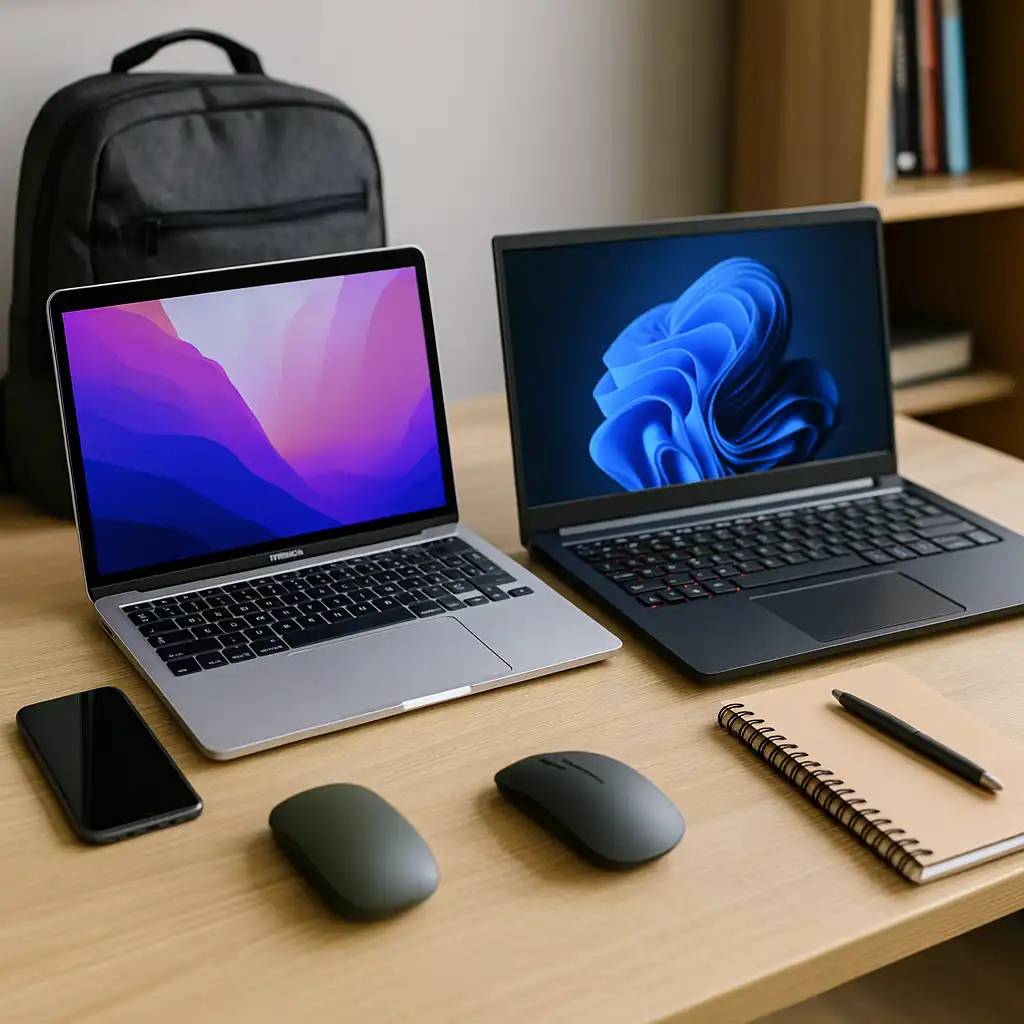
The operating system can be just as important as the hardware. Windows, macOS, and ChromeOS support different applications and workflows.
- Mac vs Windows Laptop for Students – Platform Differences Explained
- Should I Get a Mac or Windows Laptop for Students? – A Practical Comparison
- Is a Chromebook Enough for Students? – Use Cases and Limits
Students considering ChromeOS can also see our ASUS Chromebook Plus CX34 Laptop Review for a closer look at a Chromebook Plus model designed for web-based productivity, Google Workspace, and everyday academic tasks.
Check the software required by your school or degree program before choosing a platform. A Chromebook may handle browser-based coursework well, for example, while some engineering, creative, or technical programs require applications available only for Windows or macOS.
🔍 Storage, Longevity, and Performance Trade-Offs
Storage capacity and long-term usability also matter when buying a laptop that may need to last through several years of school.
- How Much Storage Does a Student Need on a Laptop? – Capacity Explained
- How to Make Your Laptop Last Through College – Longevity Tips
Students who rely primarily on cloud storage may need less local capacity, while creative, engineering, and technical workloads can require considerably more storage.
Buying with realistic long-term requirements in mind can also reduce the likelihood of needing an early upgrade.
🔍 Gaming Laptops and High-Performance Options
Some students consider gaming laptops because their powerful processors and dedicated graphics can also handle demanding academic workloads.
- Are Gaming Laptops Good for Students? – Pros and Cons Explained
- Best Gaming Laptops for Students – Performance That Matters
The additional performance can be useful for gaming, 3D applications, video editing, simulations, and other GPU-intensive workloads.
However, gaming laptops are generally larger and heavier than ultraportable models, and high-performance components can affect battery life. Students should therefore consider whether the extra performance is actually required for their coursework.
📌 Key Takeaways
- The best student laptop depends on age, academic program, software requirements, and workload
- Processor, RAM, and storage should be matched to actual coursework rather than chosen purely by higher specifications
- Windows, macOS, and ChromeOS have different software compatibility considerations
- Chromebooks can suit browser-based academic work, while specialized programs may require Windows or macOS
- Gaming laptops provide additional performance but usually involve portability and battery-life trade-offs
- A laptop intended to last several years should provide enough performance and storage for future coursework
🟢 FAQs
Q: Is there one laptop that works for all students?
No. Laptop requirements vary considerably by education level, major, software requirements, and workload.
Q: How much RAM does a student laptop need?
The appropriate amount depends on the workload. Basic browser-based tasks have lighter memory requirements than programming, virtual machines, engineering applications, video editing, or other demanding workloads.
Q: Is a Chromebook good enough for college?
A Chromebook can work well when coursework is primarily browser-based and uses services such as Google Workspace. Students should check whether their program requires Windows or macOS applications before choosing ChromeOS.
Q: Should students buy a more powerful laptop just in case?
Additional performance can provide useful headroom, but specifications should still reflect expected coursework. Buying substantially more performance than required can increase cost, weight, and power consumption without providing a meaningful benefit.
Q: Are gaming laptops good for students?
They can be useful for students who need dedicated graphics or high CPU performance, but their additional size, weight, and power requirements should also be considered.
✅ Conclusion
The best laptops for students are defined by how well their hardware, operating system, portability, and features match real academic requirements. Start by identifying the software and workload involved, then use the guides above to narrow the choice by education level, major, platform, and performance needs.