Apple Silicon vs Intel – Laptop Processor Comparison
Disclosure: This post contains affiliate links. LaptopVoyager.com participates in the Amazon Associates Program and may earn commissions on qualifying purchases, at no extra cost to you.
Last Updated: March 2026
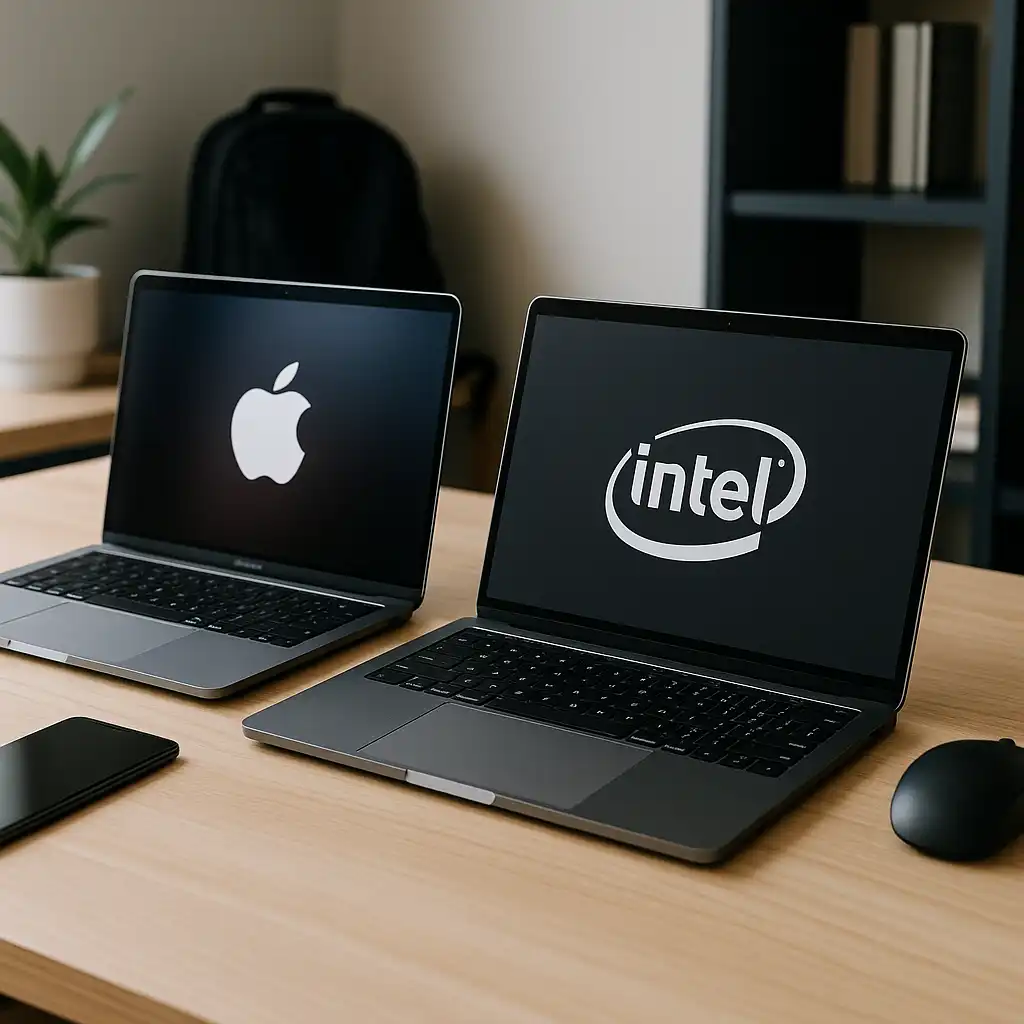
Laptop processors determine how efficiently a system runs applications, manages multitasking, and handles demanding workloads. Over the past several years, Apple’s transition from Intel processors to its own Apple Silicon chips introduced a new processor architecture designed to improve efficiency and performance.
Apple Silicon processors such as the M-series chips are built using ARM architecture, while Intel processors rely on the traditional x86 architecture used in most Windows laptops.
👉 If you’re comparing modern CPU architectures and processor platforms, see our Laptop Processor Guide.
This guide explains the differences between Apple Silicon and Intel laptop processors, including architecture design, performance behavior, and how these platforms affect everyday laptop workloads.
🔍 Apple Silicon Architecture
Apple Silicon processors are based on ARM architecture and are designed using a system-on-a-chip (SoC) approach.
Instead of separating components such as the CPU, GPU, and memory across multiple chips, Apple integrates these components into a single package. This design reduces latency between components and can improve power efficiency.
Apple’s M-series processors also combine performance cores and efficiency cores to balance demanding workloads with energy savings.
Because Apple controls both hardware and operating system design, macOS is optimized specifically for these processors.
If you’re exploring other ARM-based laptop platforms, our comparison of apple silicon vs snapdragon explains how Apple chips compare with Qualcomm processors.
🔍 Intel Laptop Processors
Intel processors power a large portion of the global laptop market, particularly Windows devices.
Most Intel laptop processors use the x86 architecture and are available across a wide range of categories including ultrabooks, business laptops, gaming systems, and mobile workstations.
Modern Intel processors also use hybrid architectures that combine performance cores and efficiency cores. This design allows the processor to handle demanding workloads while background tasks run on lower-power cores.
Intel’s processor ecosystem also supports a broad range of software compatibility across different operating systems.
For a comparison between modern Intel processors and AMD architectures, see our guide to intel core ultra vs amd ryzen 7000.
🔍 Performance Differences
Performance differences between Apple Silicon and Intel processors often depend on the specific chip generation and laptop design.
Apple Silicon processors are known for high performance per watt, meaning they can deliver strong computing performance while maintaining lower power consumption.
Intel processors, on the other hand, offer broad compatibility and appear in a wider variety of laptop designs including high-performance gaming laptops and workstation systems.
Real-world performance differences can vary depending on workload, software optimization, and the hardware configuration of the laptop.
🔍 Battery Efficiency and Thermal Design
One of the most notable differences between these platforms is power efficiency.
Apple Silicon processors are widely recognized for their efficient power management, which can contribute to longer battery life in many MacBook models.
Intel laptops vary widely in battery performance depending on the processor series and system design. Thin ultrabooks may prioritize efficiency, while gaming laptops prioritize performance and cooling capacity.
Thermal design also plays an important role in sustained performance, especially for high-performance laptop processors.
📌 Key Takeaways
- Apple Silicon processors use ARM architecture and system-on-a-chip design
- Intel processors use x86 architecture and power many Windows laptops
- Apple Silicon emphasizes efficiency and performance per watt
- Intel processors appear in a wider variety of laptop categories
- Software compatibility and operating system ecosystems influence performance results
🟢 FAQs
Q: Is Apple Silicon faster than Intel processors?
Performance varies depending on the specific processor model and workload. Apple Silicon chips often deliver strong performance per watt, while Intel processors appear in many high-performance laptop systems.
Q: Do Apple Silicon laptops run Windows software?
Apple Silicon Macs primarily run macOS applications. Some Windows software may require compatibility layers or virtualization tools.
Q: Are Intel laptops still good in 2026?
Yes. Intel processors continue to power a wide range of laptops across business, gaming, and productivity categories.
✅ Conclusion
The comparison between Apple Silicon and Intel laptop processors highlights two different approaches to laptop computing.
Apple focuses on tightly integrated hardware and software optimized for macOS, while Intel provides processors that power a broad ecosystem of Windows laptops across many performance categories.
Understanding how these architectures differ helps users choose laptops that match their preferred operating systems, workloads, and performance requirements.