Does Thermal Paste Expire? Storage and Shelf Life Explained
Disclosure: This post contains affiliate links. LaptopVoyager.com participates in the Amazon Associates Program and may earn commissions on qualifying purchases, at no extra cost to you.
Last Updated: September 2026
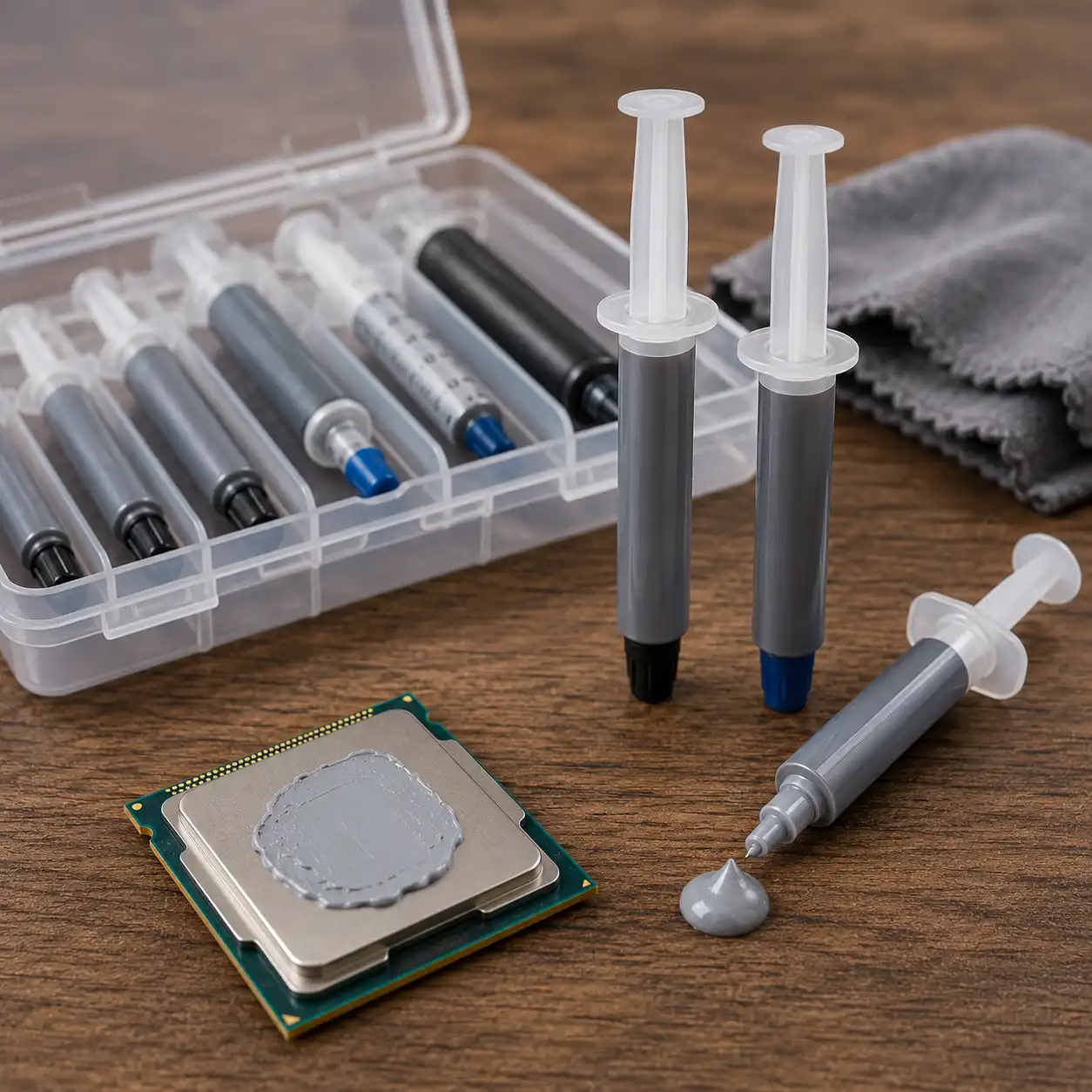
Thermal paste can remain usable for years when stored correctly, but it doesn’t have an unlimited shelf life. How long it lasts in a syringe depends on the compound, whether the package has been opened, and how it has been stored.
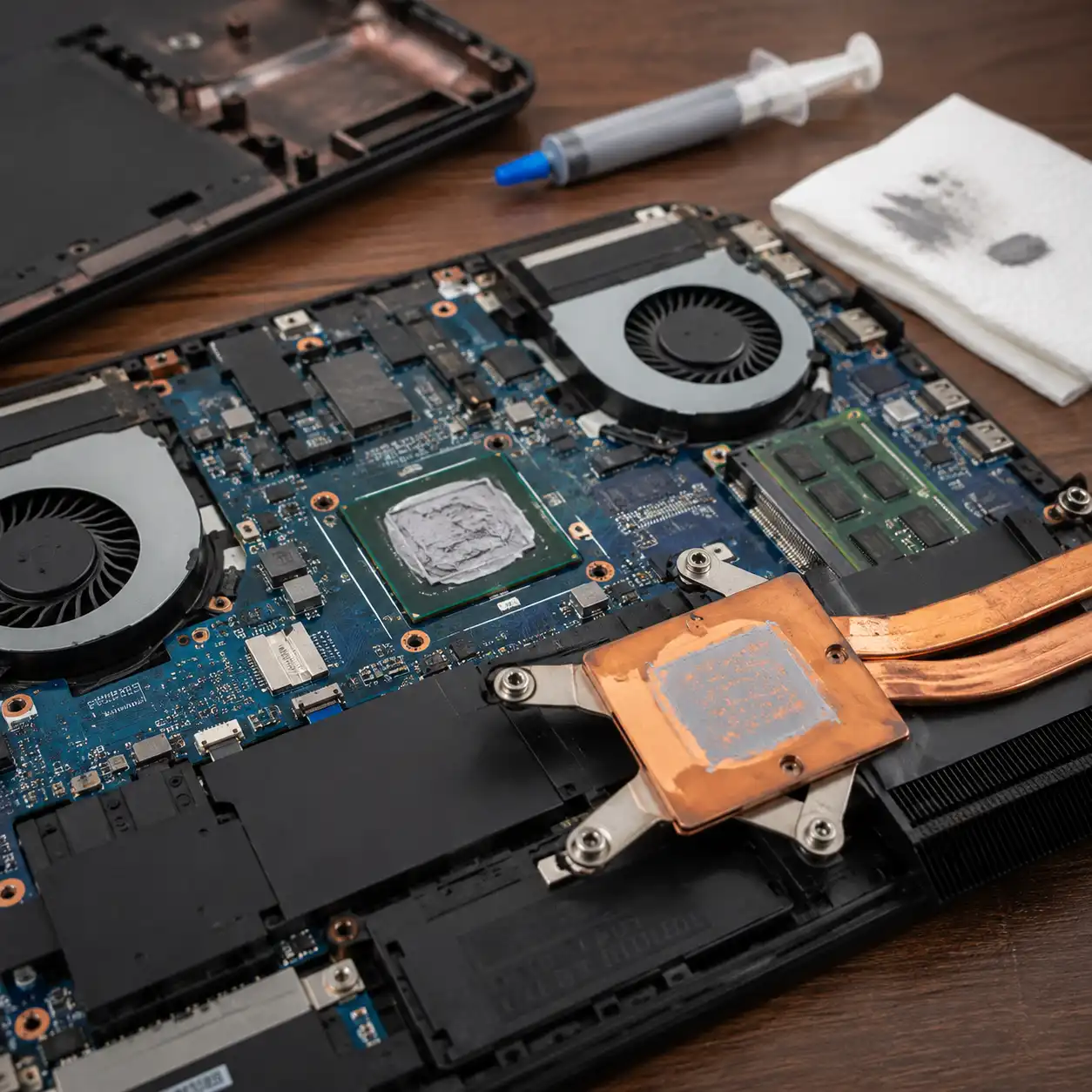
This is different from the lifespan of thermal paste already installed between a laptop processor and heatsink. Understanding that distinction can help you decide whether an older tube is still suitable for your next laptop maintenance job.
👉 For a complete overview of thermal interface materials, see Laptop Thermal Paste Guide.
📌 Key Takeaways
- Thermal paste can eventually become unsuitable for use, but there is no universal expiration period.
- Manufacturer shelf-life specifications vary significantly between thermal compounds.
- Noctua specifies up to three years of storage before use for NT-H2 and up to two years once NT-H1 or NT-H2 has been opened.
- ARCTIC states that its unopened thermal paste can be stored for up to eight years.
- Keeping thermal paste sealed at a stable room temperature and away from direct sunlight helps maintain appropriate storage conditions.
- Shelf life in the syringe is different from the service life of thermal paste already applied to a CPU or GPU.
🔍 Does Thermal Paste Expire?
Yes, thermal paste can eventually become unsuitable for use, although there isn’t one expiration period that applies to every product.
Manufacturer specifications vary considerably. Noctua specifies a recommended storage time of up to three years before use for NT-H2, while ARCTIC states that its unopened thermal paste can be stored for up to eight years.
The manufacturer’s storage instructions are therefore more useful than assuming every thermal compound expires after the same number of years.
🔍 How Long Does Unopened Thermal Paste Last?
Unopened thermal paste can have a shelf life of several years when stored according to the manufacturer’s instructions.
For example, Noctua lists up to three years of recommended storage before use for NT-H2. ARCTIC provides a longer figure, stating that its thermal paste can be stored unopened for up to eight years.
These differences show why the age of the syringe alone doesn’t determine whether thermal paste is still usable. The specific formulation and manufacturer guidance should also be considered.
🔍 How Long Does Thermal Paste Last Once Opened?
Opening a thermal paste syringe introduces another consideration because the remaining compound needs to be protected from environmental conditions during storage.
Noctua states that its NT-H1 and NT-H2 compounds can be used for up to two years once opened. The company recommends tightly closing the cap after each use and keeping the compound away from extreme temperatures and direct sunlight.
Other manufacturers may provide different guidance, so check the instructions for the specific compound you’re storing rather than applying Noctua’s two-year figure to every thermal paste.
🔍 How to Tell If Thermal Paste Has Gone Bad
An older syringe should be checked before applying its contents to a laptop CPU or GPU.
Possible warning signs include:
- Paste that has become unusually dry or hardened
- Material that is difficult or impossible to dispense normally
- Major changes in consistency compared with the compound’s expected condition
- A syringe or container that has been damaged or improperly sealed
- Paste that has been stored outside the manufacturer’s recommended conditions
Appearance alone may not provide a definitive expiration test because thermal compounds use different formulations and consistencies.
If the compound’s condition is questionable or it has been stored well beyond its manufacturer’s recommended period, using a suitable replacement avoids relying on material of uncertain condition.
🔍 Does Separated Thermal Paste Mean It Has Expired?
Some thermal compounds can show changes in consistency during storage, but visible separation shouldn’t automatically be interpreted the same way for every product.
Thermal pastes use different formulations, so the appropriate response depends on the manufacturer’s instructions. If a compound looks significantly different from its expected consistency, check the product documentation before applying it.
Avoid assuming that mixing, shaking, or discarding separated paste is universally correct. The manufacturer is the best source for product-specific storage and preparation instructions.
🔍 How Should You Store Thermal Paste?
Correct storage can help preserve unused thermal paste for future maintenance.
Noctua recommends storing its thermal compounds at normal room temperature and keeping the cap tightly closed after use. It also advises protecting the compound from extremely hot or cold temperatures and direct sunlight.
For NT-H2 specifically, Noctua’s safety documentation specifies storage at room temperature in the original packaging and away from direct sunlight.
A practical storage approach is therefore to keep the syringe sealed in its original packaging in a dry indoor location with relatively stable room temperatures.
🔍 Can Heat Damage Stored Thermal Paste?
Storage temperature can affect how well thermal paste keeps over time.
Noctua specifically warns against storing opened NT-H1 and NT-H2 in locations that tend to become hot because the compound can dry more quickly. Its storage guidance recommends normal room temperature.
This makes areas exposed to direct sunlight or substantial temperature extremes less appropriate than a stable indoor storage location.
🔍 What Happens If You Use Expired Thermal Paste?
Thermal paste is intended to fill microscopic imperfections between the processor and heatsink, creating an effective thermal interface between the two surfaces.
If an old compound has dried out or changed enough that it can no longer be applied as intended, it may not form the thermal interface specified by its manufacturer.
That doesn’t mean an arbitrary date automatically makes thermal paste ineffective. The manufacturer’s shelf-life guidance, storage history, and physical condition of the compound provide more useful information.
🔍 Expiration vs Thermal Paste Lifespan After Application
Thermal paste shelf life and thermal paste service life describe two different things.
Shelf life refers to how long the compound can be stored before application. Service life refers to how long it can remain in use between the processor and heatsink.
For example, Noctua specifies up to three years of recommended storage before use for NT-H2 but up to five years of recommended usage on a CPU. Those figures shouldn’t be treated as interchangeable.
👉 For the lifespan of paste already installed in a laptop, see How Long Does Thermal Paste Last?.
🔍 Should You Use an Old Tube of Thermal Paste?
The manufacturing or purchase date alone isn’t enough to determine whether an older tube should be used.
First, check the manufacturer’s recommended storage period. You should also consider whether the syringe has been opened, how it was stored, whether the cap remained securely closed, and whether the compound still has its expected consistency.
If the product is beyond its specified storage period or its condition is uncertain, replacing it is the more straightforward option before servicing a laptop cooling system.
If you’re planning to open the cooling assembly, see Laptop Thermal Paste Replacement for the general replacement procedure and laptop-specific precautions.
🟢 FAQs
Q: Does unopened thermal paste expire?
Yes, unopened thermal paste can have a manufacturer-specified storage period. For example, Noctua specifies up to three years before use for NT-H2, while ARCTIC states its unopened thermal paste can be stored for up to eight years.
Q: How long is thermal paste good for after opening?
It depends on the product. Noctua states that NT-H1 and NT-H2 can be used for up to two years once opened when stored appropriately.
Q: Can I use thermal paste that is five years old?
Possibly, but age alone isn’t enough to determine suitability. Check the specific manufacturer’s shelf-life guidance, whether the package was opened, its storage conditions, and the compound’s current condition.
Q: Should thermal paste be stored in the refrigerator?
Follow the manufacturer’s storage instructions rather than assuming colder storage is better. Noctua recommends normal room-temperature storage for NT-H1 and NT-H2 and advises avoiding extreme temperatures.
Q: Is thermal paste still good if it has dried out?
Thermal paste that has become unusually dry or can no longer be dispensed and applied as intended may no longer provide the interface specified by its manufacturer. Check the product guidance and replace questionable material rather than relying on degraded compound.
✅ Conclusion
So, does thermal paste expire? Thermal compound can eventually become unsuitable for use, but its shelf life varies by formulation, packaging, and storage conditions.
Check the manufacturer’s recommended storage period instead of relying on a universal expiration rule. Keeping the syringe properly sealed at the recommended temperature and away from direct sunlight can also help preserve unused thermal paste for future laptop maintenance.