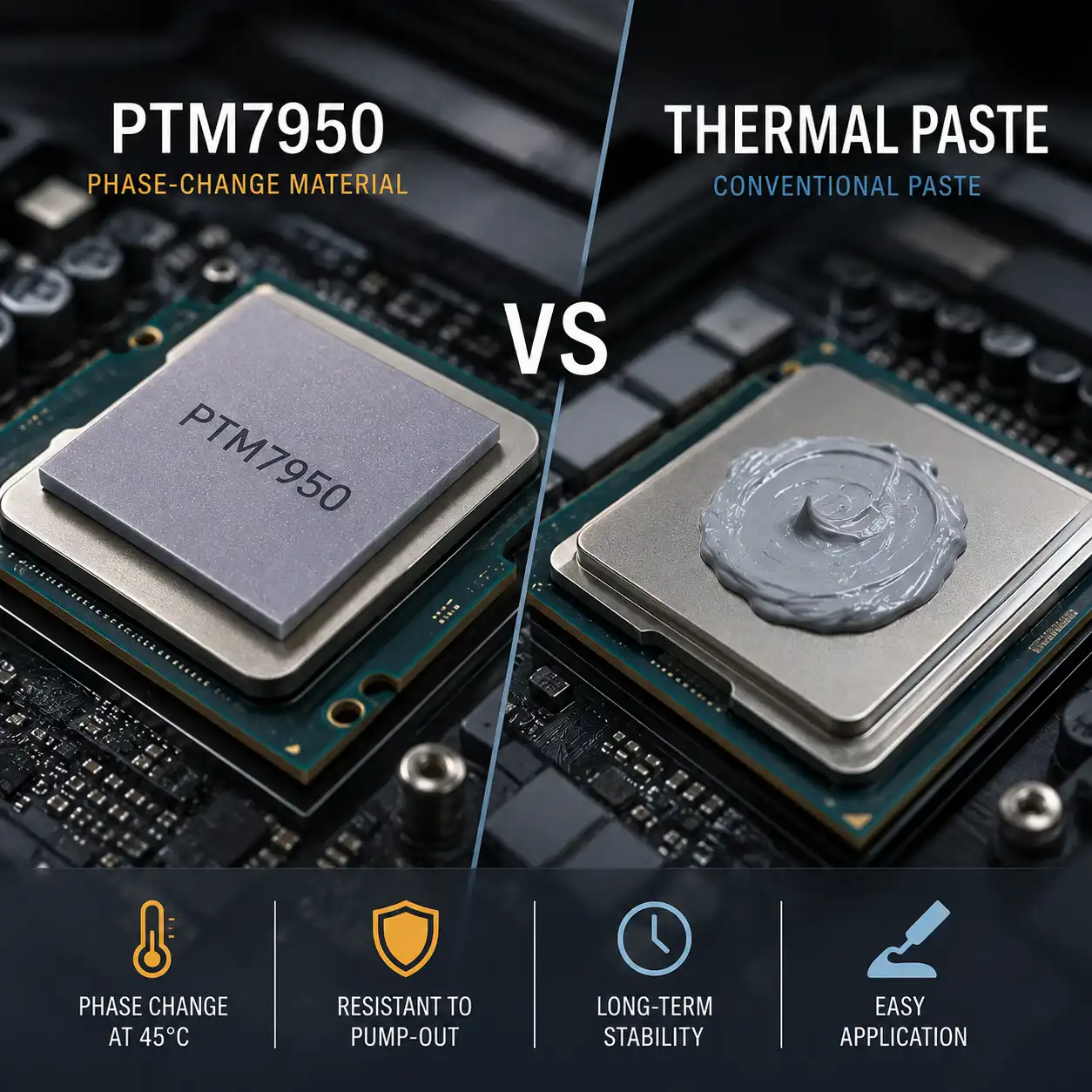
PTM7950 vs Thermal Paste – Key Differences Explained
Disclosure: This post contains affiliate links. LaptopVoyager.com participates in the Amazon Associates Program and may earn commissions on qualifying purchases, at no extra cost to you.
Last Updated: September 2026
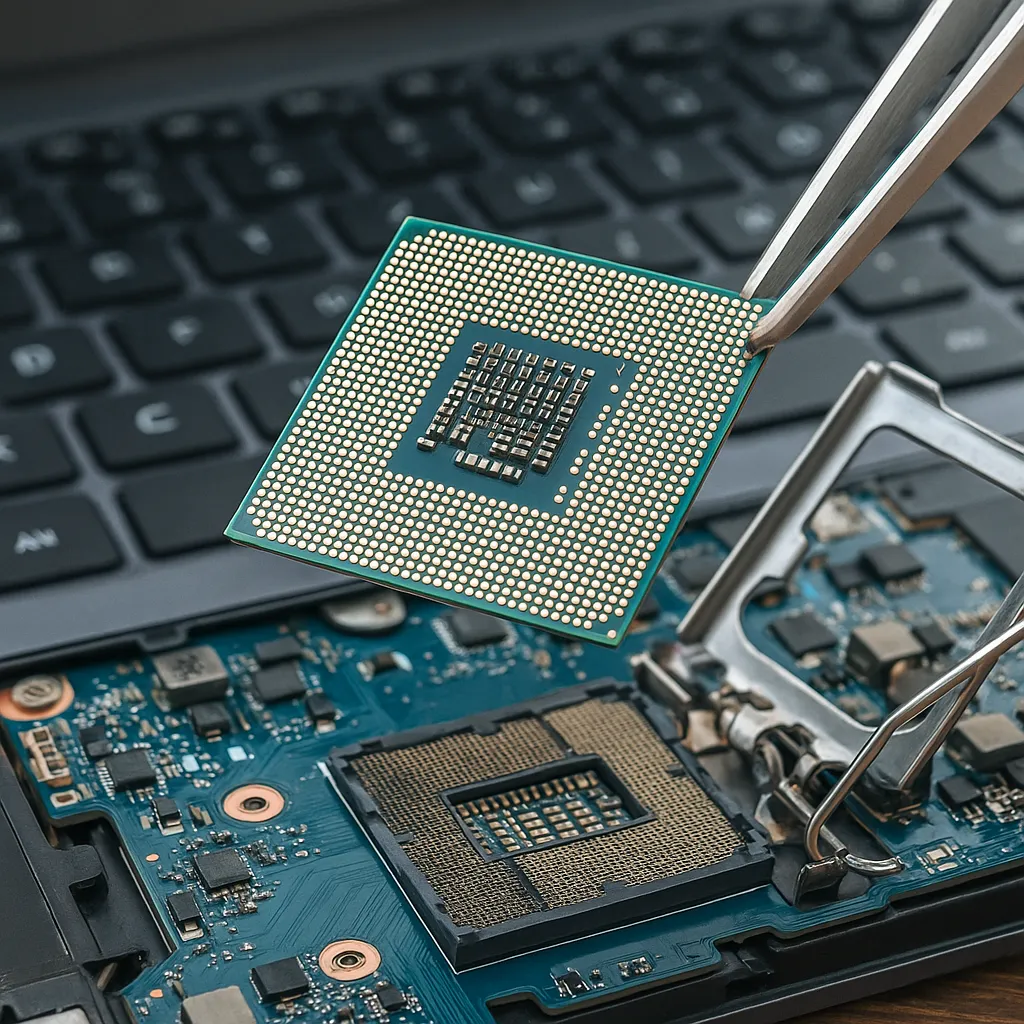
PTM7950 and conventional thermal paste perform the same basic job: creating a thermal interface between a processor and its cooling system. However, they use different material designs and behave differently as operating temperatures change.
PTM7950 is a phase-change thermal interface material from Honeywell, while conventional thermal paste remains paste-like during normal application and use. This guide compares PTM7950 vs thermal paste based on specifications, application, longevity, and laptop cooling use cases.
👉 For a complete overview of laptop thermal interface materials, see Laptop Thermal Paste Guide.
📌 Key Takeaways
- PTM7950 is a phase-change thermal interface material rather than a conventional thermal paste.
- Honeywell specifies a phase-change temperature of 45°C for PTM7950.
- PTM7950 has a specified thermal conductivity of 8.5 W/m·K.
- Honeywell lists notebooks and CPU/GPU applications among the intended uses for its phase-change materials.
- Conventional thermal paste is easier to find and is available in many different formulations.
- Material compatibility and the laptop’s original cooling design should take priority when choosing a replacement.
🔍 What Is PTM7950?
PTM7950 is a thermal phase-change material developed by Honeywell for transferring heat between electronic components and cooling hardware.
Honeywell describes its phase-change materials as solid at room temperature before softening when heated. As the material softens, it’s designed to wet the contact surfaces and create a thin thermal interface.
According to Honeywell specifications, PTM7950 has a thermal conductivity rating of 8.5 W/m·K and thermal impedance of 0.04–0.08°C·cm²/W.
Honeywell lists applications including notebooks, gaming hardware, servers, GPUs, CPUs, and other high-performance electronics.
🔍 What Is Conventional Thermal Paste?
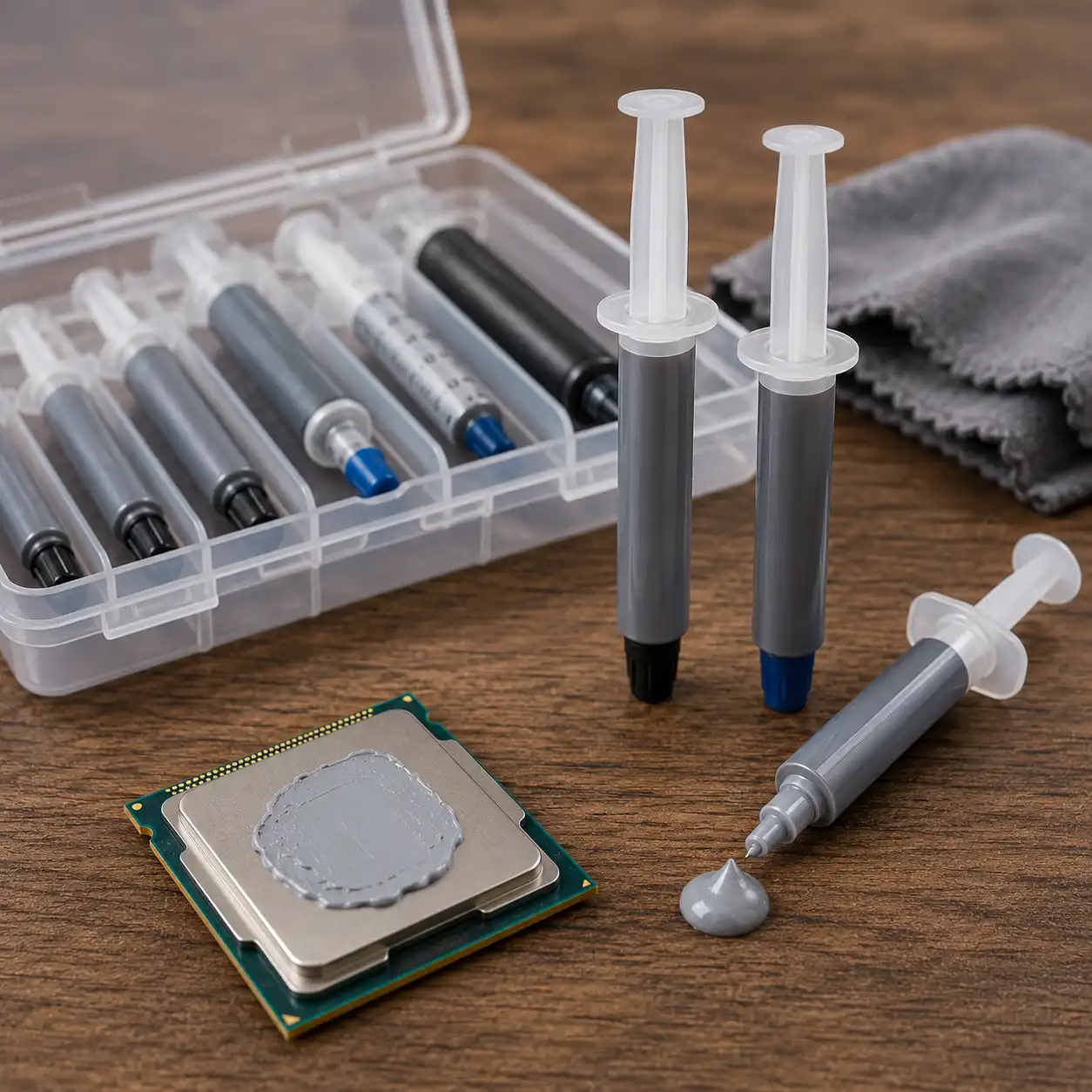
Conventional thermal paste is a semi-fluid thermal interface compound applied between a processor and heatsink.
Its purpose is to fill microscopic imperfections between the two contact surfaces. Air has relatively poor thermal conductivity, so filling these small irregularities creates a more continuous thermal path from the processor to the cooling assembly.
Thermal paste is available in many formulations, meaning thermal conductivity, viscosity, electrical properties, application methods, and manufacturer-specified longevity can vary significantly.
Unlike PTM7950, conventional paste doesn’t rely on a defined phase-change process at a specified operating temperature.
🔍 PTM7950 vs Thermal Paste: Main Differences
The main difference is how the materials behave after installation.
PTM7950 is designed to be solid at room temperature and soften as its temperature rises. Honeywell specifies a phase-change temperature of 45°C for the material.
Conventional thermal paste is already a paste when applied and doesn’t depend on this phase-change process to spread across microscopic surface irregularities.
Their installation formats are also different. PTM7950 is available as a phase-change pad, while Honeywell also documents PTM7950-SP as a paste/printable version.
That distinction is important because PTM7950 in pad form shouldn’t be confused with the thicker, compressible thermal pads commonly used to bridge gaps around laptop VRAM and other components.
👉 For more on conventional gap-filling pads, see Thermal Pad vs Thermal Paste.
🔍 How Does PTM7950 Work?
Honeywell describes phase-change materials as solid at room temperature and designed to soften when heated.
For PTM7950, Honeywell specifies a phase-change temperature of 45°C. Once the material reaches its operating range, its polymer-based structure is designed to wet the processor and heatsink surfaces.
This helps reduce surface contact resistance while maintaining a thin bond line between the component and cooling hardware.
Honeywell specifies an operating temperature range of -55°C to 150°C for PTM7950.
🔍 Cooling Performance
Directly comparing PTM7950 with all conventional thermal pastes isn’t straightforward because thermal pastes use different formulations and manufacturers may use different test methods.
Honeywell rates PTM7950 at 8.5 W/m·K thermal conductivity and 0.04–0.08°C·cm²/W thermal impedance. These specifications describe the material’s thermal properties under Honeywell’s stated testing conditions.
A thermal conductivity number alone shouldn’t determine which material will perform better in a particular laptop.
Bond-line thickness, mounting pressure, heatsink design, processor characteristics, contact quality, and application can all influence the complete thermal interface.
For this reason, published temperature comparisons should be interpreted in the context of the specific laptop, processor, cooling assembly, and competing thermal compound being tested.
🔍 PTM7950 and Pump-Out
Pump-out is one reason phase-change materials can be relevant to laptop cooling.
Repeated heating and cooling cycles can place mechanical stress on a thermal interface as the processor, heatsink, and surrounding materials expand and contract. Depending on the thermal compound and application, this cycling can gradually move material away from parts of the contact area.
Honeywell specifically describes its phase-change materials as providing high reliability without pump-out issues. The company attributes this behavior to the polymer phase-change structure and the thin bond line created after the material softens.
This characteristic can be particularly relevant to high-performance electronics that repeatedly cycle between lower and higher operating temperatures.
🔍 PTM7950 vs Thermal Paste Longevity
There isn’t a universal service-life figure that allows PTM7950 and every thermal paste to be compared by a simple number of years.
Conventional thermal compounds have different formulations and manufacturer recommendations. Some manufacturers specify several years of CPU use, while others don’t provide a fixed replacement interval.
Honeywell positions its phase-change materials around long-term reliability and states that the material maintains low thermal impedance during reliability testing for long-life applications.
This means longevity comparisons should be based on the specific conventional paste being considered rather than assuming all thermal pastes behave the same way.
👉 For more detail on conventional compounds, see How Long Does Thermal Paste Last?.
🔍 Applying PTM7950 vs Thermal Paste
Application is one of the clearest practical differences.
Conventional thermal paste is dispensed directly onto the processor or heatsink according to the compound manufacturer’s instructions. Mounting the cooling assembly then spreads the material across the interface.
PTM7950 in pad form is supplied as a solid sheet that needs to cover the appropriate contact area. After installation, operating heat brings the material through its phase-change temperature.
Because the two materials use different installation methods, the manufacturer’s instructions should take priority over generic thermal-paste application techniques.
The cooling surfaces should also be prepared appropriately before installing either material.
🔍 Is PTM7950 the Same as a Thermal Pad?
PTM7950 is supplied in pad form, but it shouldn’t be treated as equivalent to a conventional gap-filling thermal pad.
Conventional thermal pads are commonly used to bridge larger spaces between heatsinks and components such as VRAM or voltage-regulation hardware. Their thickness helps maintain contact where the two surfaces don’t sit directly against each other.
PTM7950 is instead a phase-change interface designed to create a thin bond line after it softens.
This difference is important when servicing laptops because replacing a conventional VRAM thermal pad with PTM7950 simply because both products are called “pads” may change the spacing intended by the cooling-system design.
🔍 Is PTM7950 Suitable for Laptops?
Honeywell specifically lists notebooks among the applications for its thermally conductive phase-change materials. Its technical application documentation also identifies PTM7950 for GPU and CPU applications.
That makes the material relevant to laptop cooling systems where its specifications and physical format are compatible with the original cooling design.
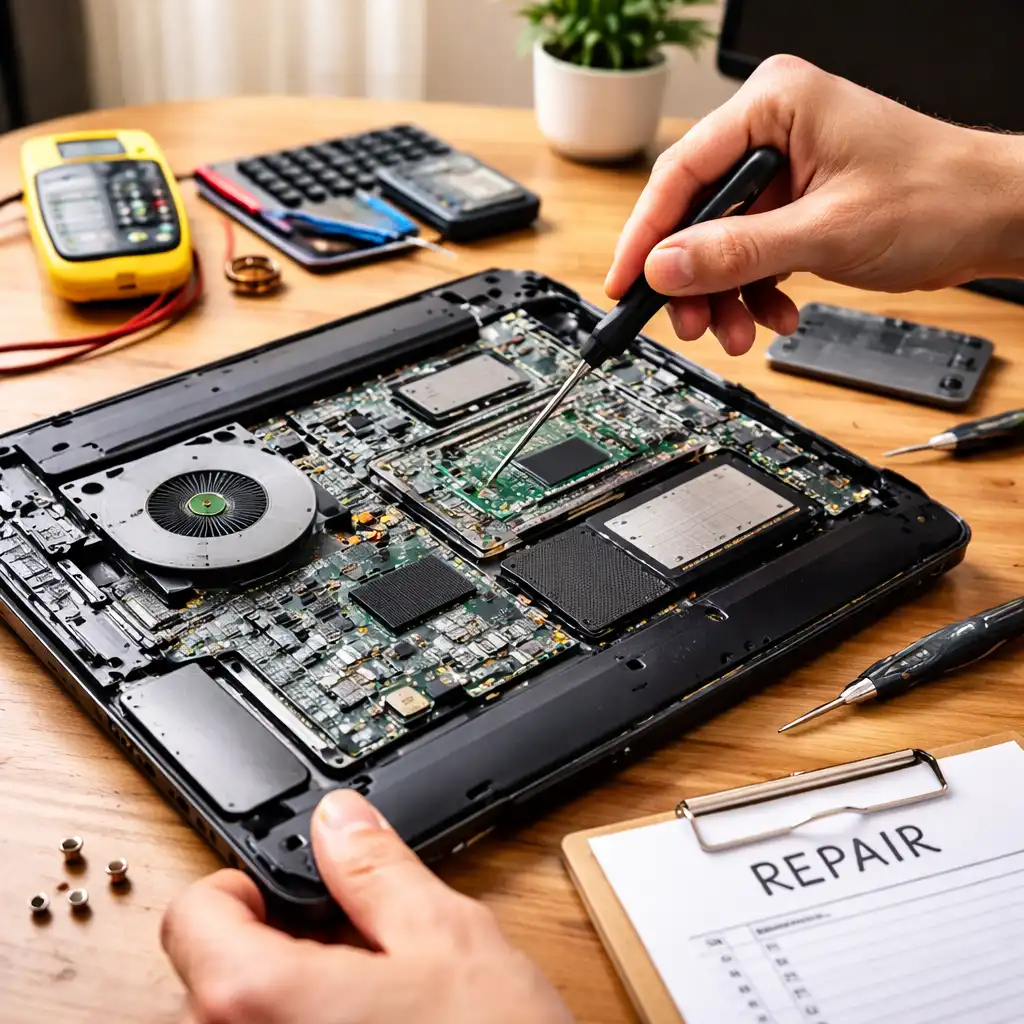
However, laptop manufacturers use different thermal interface solutions. A particular model may use conventional paste, phase-change material, thermal pads, thermal putty, or a combination of several materials.
Before changing the original thermal interface, check the laptop manufacturer’s service documentation when available.
🔍 PTM7950 vs Thermal Paste: Which Should You Use?
Neither option is automatically appropriate for every laptop.
PTM7950 may make sense when:
- A phase-change interface is compatible with the laptop’s cooling design
- Long-term interface stability is an important consideration
- The CPU or GPU uses a direct heatsink contact suitable for a thin phase-change material
- Manufacturer or service information supports this type of interface
Conventional thermal paste may make sense when:
- The laptop originally uses conventional thermal compound
- Manufacturer service documentation specifies paste
- You want a straightforward replacement using a compatible compound
- The selected paste meets the requirements of the processor and cooling system
The original laptop design should remain the primary reference. Changing thermal interface materials can also affect heatsink contact or mounting behavior if the replacement has different physical properties.
🟢 FAQs
Q: Is PTM7950 better than thermal paste?
Not universally. Honeywell designs PTM7950 as a phase-change material with long-term interface stability, while conventional thermal pastes vary considerably in formulation and specifications. Performance depends on the specific compound and cooling system.
Q: What temperature does PTM7950 change phase?
Honeywell specifies a phase-change temperature of 45°C for PTM7950. The material is designed to soften as it heats and wet the contact surfaces.
Q: What is the thermal conductivity of PTM7950?
Honeywell specifies thermal conductivity of 8.5 W/m·K for PTM7950.
Q: Is PTM7950 a thermal pad?
Honeywell describes PTM7950 as a phase-change pad, but it isn’t equivalent to the conventional compressible thermal pads commonly used to bridge larger gaps around VRAM and other laptop components.
Q: Can PTM7950 be used on a laptop CPU or GPU?
Honeywell lists notebooks and CPU/GPU applications for its phase-change materials. Compatibility with a particular laptop still depends on its cooling-system design and original thermal interface.
✅ Conclusion
The main difference in the PTM7950 vs thermal paste comparison is how the thermal interface behaves. Conventional thermal paste is applied as a semi-fluid compound, while Honeywell PTM7950 is a phase-change material designed to soften at 45°C and create a thin thermal interface as operating temperatures rise.
PTM7950’s specifications and resistance to pump-out make it relevant to laptop CPU and GPU applications, but it isn’t automatically the correct replacement for every laptop. Check the original thermal interface and manufacturer service information before changing materials.