i5 vs i7 Laptop: Which Is Better for Your Needs?
Disclosure: This post contains affiliate links. LaptopVoyager.com participates in the Amazon Associates Program and may earn commissions on qualifying purchases, at no extra cost to you.
Last Updated: March 2026
Choosing between Intel Core i5 and Intel Core i7 processors is one of the most common decisions when buying a laptop. Both processor families appear in a wide range of devices, from affordable everyday laptops to powerful productivity and gaming systems.
The differences between i5 and i7 processors usually involve core counts, clock speeds, and advanced performance features. Understanding how these factors affect real workloads helps buyers select a laptop that matches their needs.
👉 If you’re comparing modern CPUs across laptop platforms, see our guide to best laptop processor.
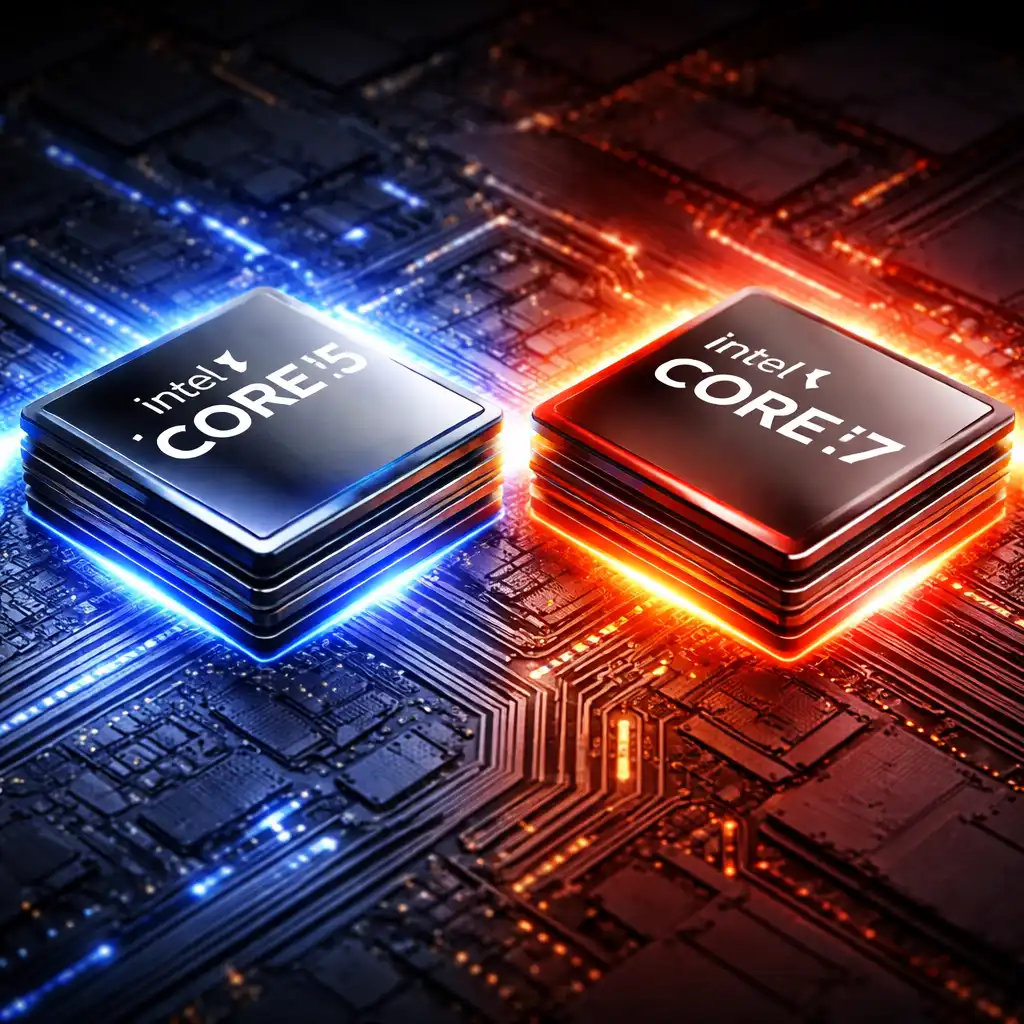
This guide explains how Core i5 and Core i7 laptop processors compare, including their architecture differences, performance characteristics, and which users benefit most from each option.
🔍 Intel Core i5 Laptop Processors
Intel Core i5 processors are widely used in mainstream laptops designed for everyday computing tasks.
According to Intel specifications, most modern i5 processors include multiple performance cores and efficiency cores designed to balance responsiveness and energy efficiency.
Laptops equipped with Core i5 processors are commonly designed for tasks such as:
- web browsing
- document editing
- video streaming
- light productivity workloads
Because of their balanced performance and efficiency, Core i5 processors appear frequently in student laptops, office laptops, and thin-and-light systems.
🔍 Intel Core i7 Laptop Processors
Intel Core i7 processors typically sit one tier above Core i5 within Intel’s lineup and often include higher clock speeds or additional cores.
According to Intel documentation, i7 processors are designed for more demanding workloads, including multitasking and applications that benefit from higher processing power.
Many laptops using Core i7 processors are designed for workloads such as:
- photo editing
- video editing
- programming and development
- heavier multitasking environments
These processors also appear in many gaming laptops and mobile workstations where additional processing performance is useful.
🔍 Performance Differences Between i5 and i7
The performance gap between Core i5 and Core i7 processors depends on the specific generation and model.
In many cases, i7 processors include:
- higher boost clock speeds
- more CPU cores or threads
- larger cache sizes
Published benchmarks often show that these factors help improve performance in CPU-intensive applications and multitasking scenarios.
However, everyday tasks such as browsing, document editing, and media consumption often run smoothly on modern Core i5 processors.
🔍 When a Core i5 Laptop Makes Sense
Core i5 laptops are often suitable for users who want reliable performance for common daily tasks without requiring high-end hardware.
Typical users who benefit from Core i5 systems include:
- students
- office professionals
- general home users
- travelers who prefer lightweight laptops
Because many manufacturers pair Core i5 processors with efficient cooling systems, these laptops often prioritize battery life and portability.
🔍 When a Core i7 Laptop Is Worth It
Core i7 laptops can make sense for users who regularly run more demanding software or multitasking workloads.
Examples include:
- content creation tools
- coding environments
- engineering or design software
- multitasking with many browser tabs and applications
These processors are also common in laptops paired with powerful GPUs, making them suitable for users who need stronger overall system performance.
📌 Key Takeaways
- Intel Core i5 processors power many mainstream laptops for everyday tasks
- Intel Core i7 processors generally offer higher performance and more cores
- Everyday productivity tasks run smoothly on most modern i5 laptops
- i7 processors can benefit multitasking and demanding software workloads
🟢 FAQs
Q: Is an i7 laptop much faster than an i5?
Performance differences depend on the processor generation and laptop design. In CPU-intensive workloads, i7 processors may deliver higher performance.
Q: Is a Core i5 enough for everyday use?
Yes. Many Core i5 laptops are designed for common computing tasks such as web browsing, office work, and media streaming.
Q: Should students choose i5 or i7 laptops?
Many students can work effectively with Core i5 laptops, although users running demanding software may benefit from Core i7 processors.
✅ Conclusion
Comparing Intel Core i5 and Core i7 laptop processors helps clarify how different processor tiers support different workloads.
Core i5 processors typically deliver balanced performance for everyday computing, while Core i7 processors often provide additional power for demanding applications and multitasking environments.
Choosing between them depends primarily on the type of software and workload a laptop will be used for.