Intel Core Ultra vs AMD Ryzen 7000 – Laptop Processor Architecture and Performance Comparison
Disclosure: This post contains affiliate links. LaptopVoyager.com participates in the Amazon Associates Program and may earn commissions on qualifying purchases, at no extra cost to you.
Last Updated: March 2026
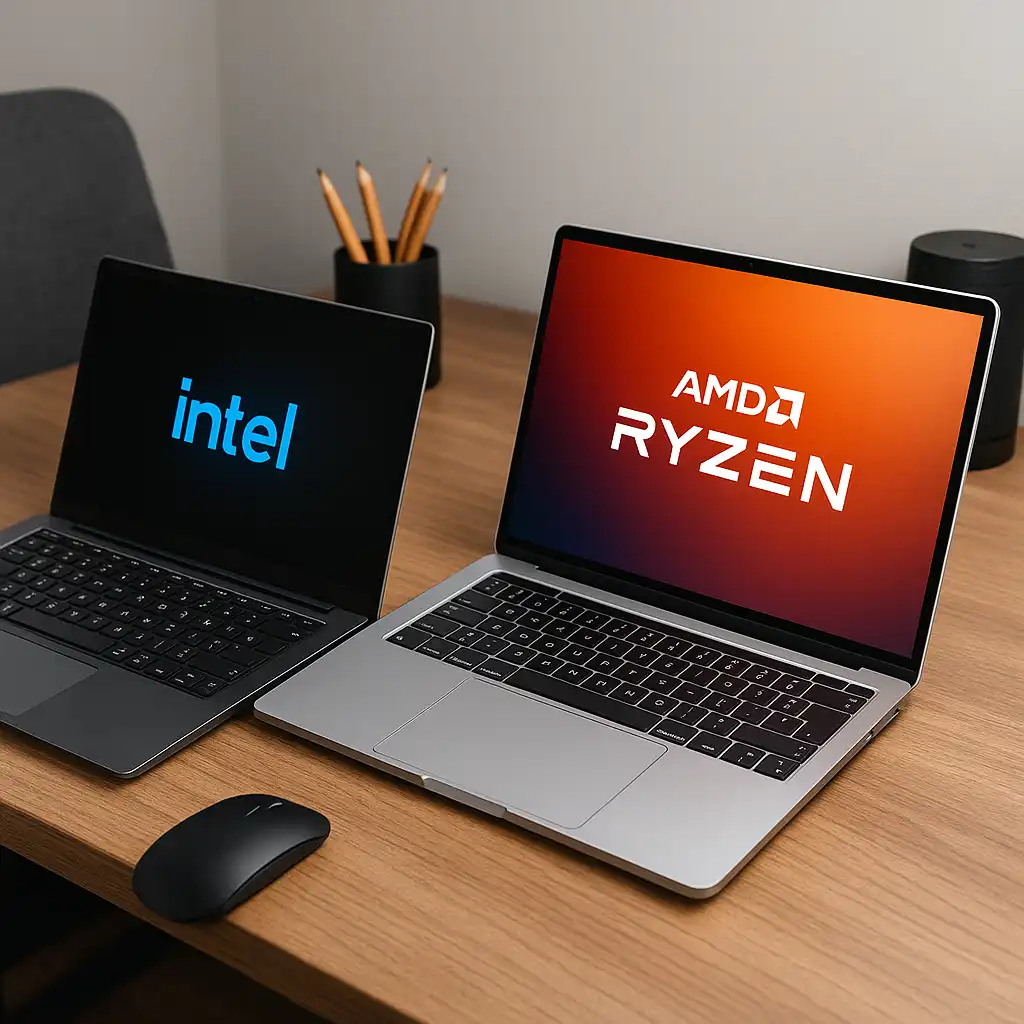
Laptop processors continue to evolve as manufacturers focus on higher performance, better efficiency, and improved AI capabilities. Two important processor families in modern laptops are Intel Core Ultra processors and AMD Ryzen 7000 series chips, both designed for different types of laptop workloads.
Intel Core Ultra processors represent Intel’s newer architecture built around hybrid cores and integrated AI acceleration, while AMD Ryzen 7000 processors are based on AMD’s Zen 4 architecture and are widely used in gaming laptops, creator systems, and performance-focused notebooks.
👉 If you’re comparing CPU performance across laptop categories, see our guide to best laptop processor.
This guide explains how Intel Core Ultra and AMD Ryzen 7000 laptop processors differ, including architecture design, performance characteristics, and which workloads each platform supports based on manufacturer specifications and published benchmarks.
🔍 Intel Core Ultra Laptop Processors
Intel Core Ultra processors are part of Intel’s newer processor architecture designed to improve efficiency and support modern AI workloads.
According to Intel documentation, these processors combine performance cores, efficiency cores, and a dedicated neural processing unit (NPU) designed for AI-related tasks.
Many Core Ultra processors also include updated integrated graphics and improved power efficiency, making them common in thin-and-light laptops and premium productivity systems.
Manufacturers often position Core Ultra processors in laptops designed for everyday productivity, multitasking, and AI-assisted applications.
🔍 AMD Ryzen 7000 Laptop Processors
AMD Ryzen 7000 processors are based on AMD’s Zen 4 architecture, which focuses on high clock speeds and strong multi-core performance.
According to AMD specifications, many Ryzen 7000 processors include multiple cores and threads designed for demanding workloads such as gaming, content creation, and heavy multitasking.
Ryzen 7000 processors are widely used in gaming laptops, creator laptops, and high-performance notebooks, where sustained CPU performance is important.
Published benchmark comparisons frequently show strong multi-threaded performance from Zen-based processors in applications that scale well with additional cores.
🔍 Architecture Differences
The most significant difference between these processor families lies in their architectural design.
Intel Core Ultra processors rely on a hybrid architecture, which combines high-performance cores with lower-power efficiency cores. This structure helps the processor balance demanding tasks with background processes.
AMD Ryzen 7000 processors typically use symmetrical high-performance cores, meaning each core is designed to deliver similar performance levels.
These architectural differences influence how each processor handles multitasking and power efficiency.
These architectural differences influence how each processor handles multitasking and power efficiency. For a broader overview of CPU architecture in laptops, see our guide to what is a laptop processor.
🔍 Integrated Graphics and AI Features
Intel Core Ultra processors often include updated integrated graphics and hardware support for AI workloads through the NPU.
This design helps support emerging AI-accelerated applications such as image processing, productivity tools, and system optimization features.
AMD Ryzen 7000 processors also include integrated graphics in many models, although many laptops using Ryzen chips pair them with dedicated GPUs for gaming or creative workloads.
The presence of a dedicated GPU often plays a larger role in graphics performance than the CPU architecture alone.
🔍 Performance Considerations
Performance differences between Intel Core Ultra and AMD Ryzen 7000 processors depend heavily on the specific chip model and laptop configuration.
According to published benchmarks and manufacturer specifications, Ryzen 7000 processors often deliver strong multi-core performance, which can benefit workloads such as rendering, compiling, and multitasking.
Intel Core Ultra processors often emphasize efficiency and modern AI-related capabilities, particularly in thin laptop designs that prioritize battery life and portability.
Neither platform is universally better; performance advantages depend on the workload and laptop design.
📌 Key Takeaways
- Intel Core Ultra processors use hybrid architectures with performance and efficiency cores
- AMD Ryzen 7000 processors use Zen 4 architecture designed for strong multi-core performance
- Core Ultra processors often emphasize efficiency and AI acceleration features
- Ryzen 7000 processors appear frequently in gaming and creator laptops
- Actual performance differences depend on the specific laptop configuration
🟢 FAQs
Q: Is Intel Core Ultra better than AMD Ryzen 7000?
Performance differences depend on the processor model and workload. Each platform is designed for different laptop categories and performance priorities.
Q: Are Ryzen 7000 laptops good for gaming?
Many gaming laptops use Ryzen 7000 processors because they offer strong multi-core performance and are commonly paired with dedicated GPUs.
Q: What makes Intel Core Ultra processors different?
Intel Core Ultra processors include hybrid cores and AI-focused features such as neural processing units designed for modern computing workloads.
✅ Conclusion
Comparing Intel Core Ultra and AMD Ryzen 7000 laptop processors highlights two different approaches to modern laptop CPU design.
Intel focuses on hybrid architectures and AI-related processing features, while AMD emphasizes high-performance Zen-based cores designed for demanding workloads.
Understanding how these platforms differ helps buyers choose laptops that match their performance requirements and intended workloads.