Is Snapdragon Better Than Intel? Laptop Processor Differences Explained
Disclosure: This post contains affiliate links. LaptopVoyager.com participates in the Amazon Associates Program and may earn commissions on qualifying purchases, at no extra cost to you.
Last Updated: March 2026
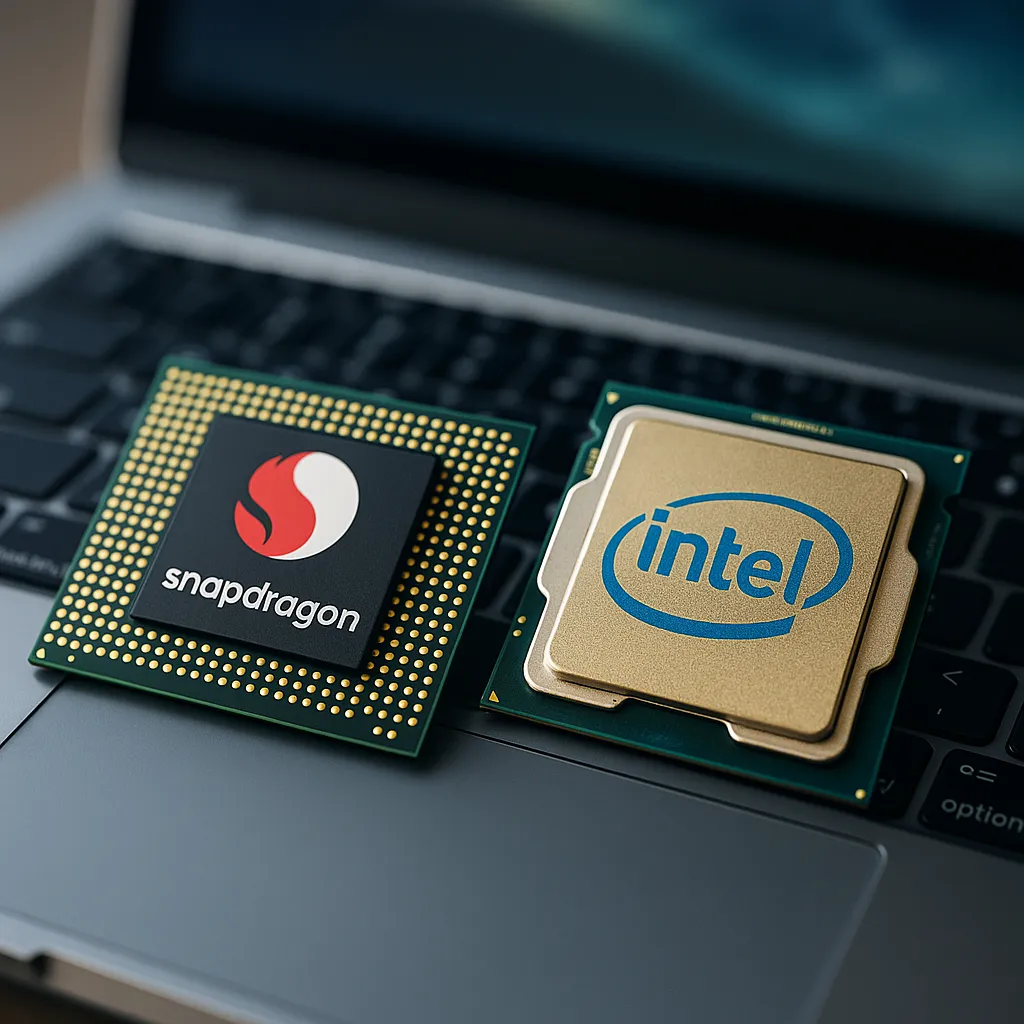
Laptop processors are evolving quickly as manufacturers focus on efficiency, performance, and new AI-related capabilities. Two platforms that often appear in modern laptop discussions are Qualcomm Snapdragon processors and Intel laptop processors.
Snapdragon chips are commonly used in ARM-based laptops designed for long battery life and mobile-style efficiency, while Intel processors power a wide range of traditional laptops focused on compatibility and performance.
👉 For a broader overview of laptop CPU architectures, performance, cores, and processor platforms, see our Laptop Processor Guide.
This guide explains whether Snapdragon processors are better than Intel processors for laptops, including architecture differences, performance characteristics, and which platform may suit different types of users based on manufacturer specifications and published benchmarks.
🔍 Snapdragon Laptop Processors
Snapdragon laptop processors are based on ARM architecture, which is commonly used in smartphones and mobile devices.
According to Qualcomm documentation, Snapdragon processors focus on power efficiency, integrated AI capabilities, and always-connected laptop features.
Many Snapdragon-powered laptops are designed for:
- long battery life
- lightweight portable devices
- mobile-style efficiency
- constant connectivity through integrated cellular support
Because of their ARM architecture, Snapdragon processors may rely on software compatibility layers when running some traditional desktop applications.
🔍 Intel Laptop Processors
Intel processors are based on x86 architecture, which has been the standard platform for most personal computers for decades.
According to Intel specifications, these processors are designed for a wide range of workloads, including productivity applications, gaming, development, and creative software.
Intel processors appear in many laptop categories, including:
- ultrabooks and thin laptops
- business and productivity laptops
- gaming laptops
- creator laptops
Because most desktop software is built for x86 platforms, Intel processors generally offer broad compatibility with existing applications.
🔍 Architecture Differences
The biggest difference between Snapdragon and Intel processors lies in their underlying architecture.
Snapdragon processors use ARM-based architecture, which emphasizes efficiency and mobile-style power management.
Intel processors use x86 architecture, which prioritizes compatibility with traditional desktop software and a wide range of applications.
These architectural differences influence how laptops handle performance, battery life, and software compatibility.
For a deeper comparison of ARM-based processors and traditional laptop CPUs, see our guide to snapdragon processor vs intel.
🔍 Performance Considerations
Performance differences between Snapdragon and Intel processors depend heavily on the specific processor model and laptop design.
According to manufacturer specifications and published benchmarks:
- Snapdragon processors often prioritize efficiency and long battery life
- Intel processors often deliver strong performance in traditional desktop applications
Some workloads, such as video editing, software development, and gaming, may benefit from the compatibility and performance characteristics of x86 processors.
However, Snapdragon processors can be effective in lightweight laptops designed for web-based workloads and mobile productivity.
🔍 Battery Life and Efficiency
One of the most common reasons manufacturers use Snapdragon processors in laptops is power efficiency.
ARM-based processors are designed to consume less power during everyday tasks, which can help laptops achieve longer battery life depending on the system configuration.
Intel processors also include power-management technologies, and many modern Intel-based laptops deliver strong battery performance as well.
Battery life ultimately depends on the entire laptop design, including battery size, display type, and power settings.
📌 Key Takeaways
- Snapdragon processors use ARM architecture focused on efficiency and mobility
- Intel processors use x86 architecture designed for broad software compatibility
- Snapdragon laptops often emphasize long battery life and lightweight designs
- Intel laptops support a wider range of traditional desktop applications
- The better option depends on the type of workload and software requirements
🟢 FAQs
Q: Is Snapdragon faster than Intel for laptops?
Performance depends on the specific processor model and workload. Snapdragon processors often prioritize efficiency, while Intel processors commonly focus on broader application performance.
Q: Are Snapdragon laptops good for everyday use?
Many Snapdragon laptops are designed for web browsing, productivity applications, and portable everyday computing tasks.
Q: Do Snapdragon laptops run all Windows software?
Some traditional desktop applications may rely on compatibility layers when running on ARM-based systems, depending on the software design.
✅ Conclusion
Comparing Snapdragon vs Intel laptop processors highlights two different approaches to modern computing.
Snapdragon processors focus on efficiency, battery life, and mobile-style architectures, while Intel processors emphasize compatibility and performance across many traditional applications.
Choosing between them depends on the type of software you use and the kind of laptop experience you want.