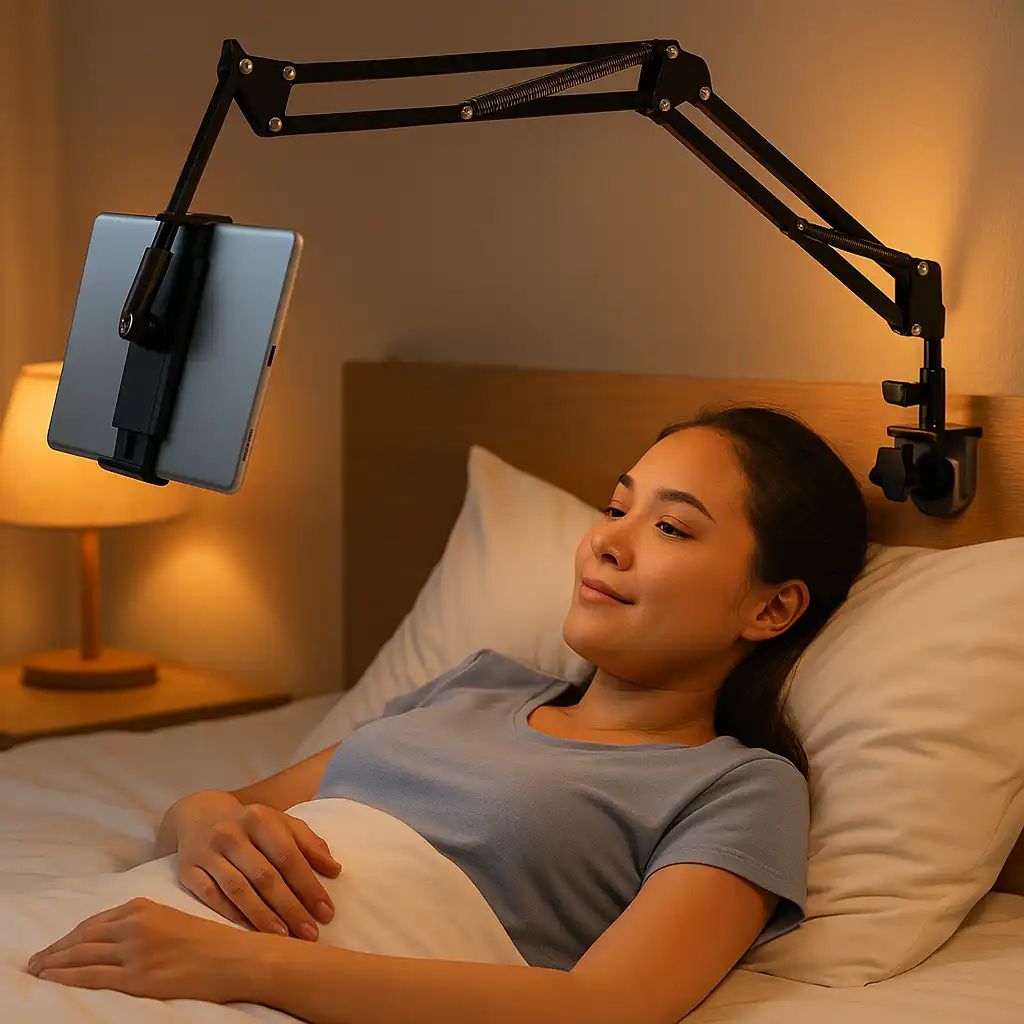
Upside Down Laptop Stand for Bed – Flexible Overhead Setup Guide
Disclosure: This post contains affiliate links. LaptopVoyager.com participates in the Amazon Associates Program and may earn commissions on qualifying purchases, at no extra cost to you.
Last Updated: April 2026
Using a laptop while lying down can be uncomfortable when the device rests directly on your lap or bed. This is where upside down laptop stands—often designed as adjustable arms or clamp mounts—offer a different approach.
Instead of supporting the laptop from below, these stands hold the device above you. This allows hands-free use and more flexible positioning, especially for relaxed environments like beds or sofas.
👉 For a broader overview, see laptop ergonomics and posture
💰 Check Price & Availability
View on Amazon – SAMHOUSING Tablet Stand Adjustable – Aluminum Arm, Foldable
View on Amazon – SAMHOUSING Tablet Stand for Bed – 360° Rotating Arm
View on Amazon – Gooseneck Tablet Holder Stand – Flexible Clamp Mount
This guide compares three flexible arm-style stands designed for overhead or hands-free use.
📋 Quick-View Comparison List
Best Overall: SAMHOUSING Adjustable Aluminum Arm for stable overhead positioning
Best Flexibility: SAMHOUSING 360° Rotating Arm for full movement range
Best Budget Option: Gooseneck Tablet Holder for simple clamp-based use
🔍 What Is an Upside Down Laptop Stand
An upside down laptop stand typically refers to a clamp-mounted or arm-based holder that suspends your device above your viewing position.
Based on product design, these stands attach to a desk, bed frame, or side surface and extend over the user. The device is held in place using clamps or brackets.
This setup is different from traditional stands, which support the laptop from underneath.
📦 Best Overall – SAMHOUSING Adjustable Aluminum Arm Stand
The SAMHOUSING adjustable arm stand is designed with a rigid aluminum structure for improved stability.
According to manufacturer specifications, the arm can be adjusted vertically and horizontally to position the device above the user. The foldable design allows it to be stored when not in use.
This configuration suits users who want a more stable overhead setup for extended use.
📦 Best Flexibility – SAMHOUSING 360° Rotating Arm Stand
This SAMHOUSING model focuses on flexibility with a fully rotating arm system.
Based on specifications, the 360° rotation allows users to adjust the viewing angle easily. This makes it suitable for switching between different positions while sitting or lying down.
This option works well for users who frequently reposition their device.
📦 Best Budget Option – Gooseneck Tablet Holder Stand
The gooseneck holder uses a flexible arm that can be bent into different positions.
According to product specifications, the clamp base attaches to surfaces like bed frames or desks. The flexible arm allows quick adjustments, although it may offer less stability compared to rigid designs.
This type of stand suits users looking for a simple, lightweight solution.
🔍 Stability vs Flexibility Trade-Off
Upside down stands vary between rigid arm designs and flexible gooseneck models.
Rigid arms:
Provide better stability and hold heavier devices more securely.
Flexible arms:
Allow easier adjustments but may move slightly during use.
According to product design differences, choosing between these depends on whether stability or flexibility is the priority.
🔍 When This Setup Makes Sense
Upside down laptop stands are designed for specific use cases.
They are best suited for:
- Watching content hands-free
- Light browsing or reading
- Using devices while lying down
They are less suited for:
- Heavy typing
- Precision tasks
- Long productivity sessions
👉 For more stable setups, see best laptop stand for bed and sofa
📌 Key Takeaways
- Upside down stands support hands-free device use
- Rigid arms offer better stability
- Gooseneck designs prioritize flexibility
- Best suited for relaxed and casual use
🟢 FAQs
Q: Can you use a laptop with an upside down stand?
Some models support lightweight laptops, but many are designed primarily for tablets or smaller devices.
Q: Are these stands good for working in bed?
They are better suited for light use rather than full work sessions.
Q: Do overhead stands improve posture?
They can reduce neck bending in some positions but are not a full ergonomic solution.
Q: Are clamp stands stable enough?
Stability depends on the design, with rigid arms generally offering better support.
✅ Conclusion
Upside down laptop stands offer a flexible way to use devices hands-free while lying down. Based on specifications, rigid arm designs provide better stability, while flexible mounts offer easier positioning.
Choosing the right type depends on how you plan to use your device and how much adjustment you need.